
October 4, 2026
Best Time of Day for a Las Vegas Elopement (Month by Month)
The best time of day for a Las Vegas elopement is the hour before sunset most of the year, and sunrise in summer. Real sunrise and sunset times, month by month.
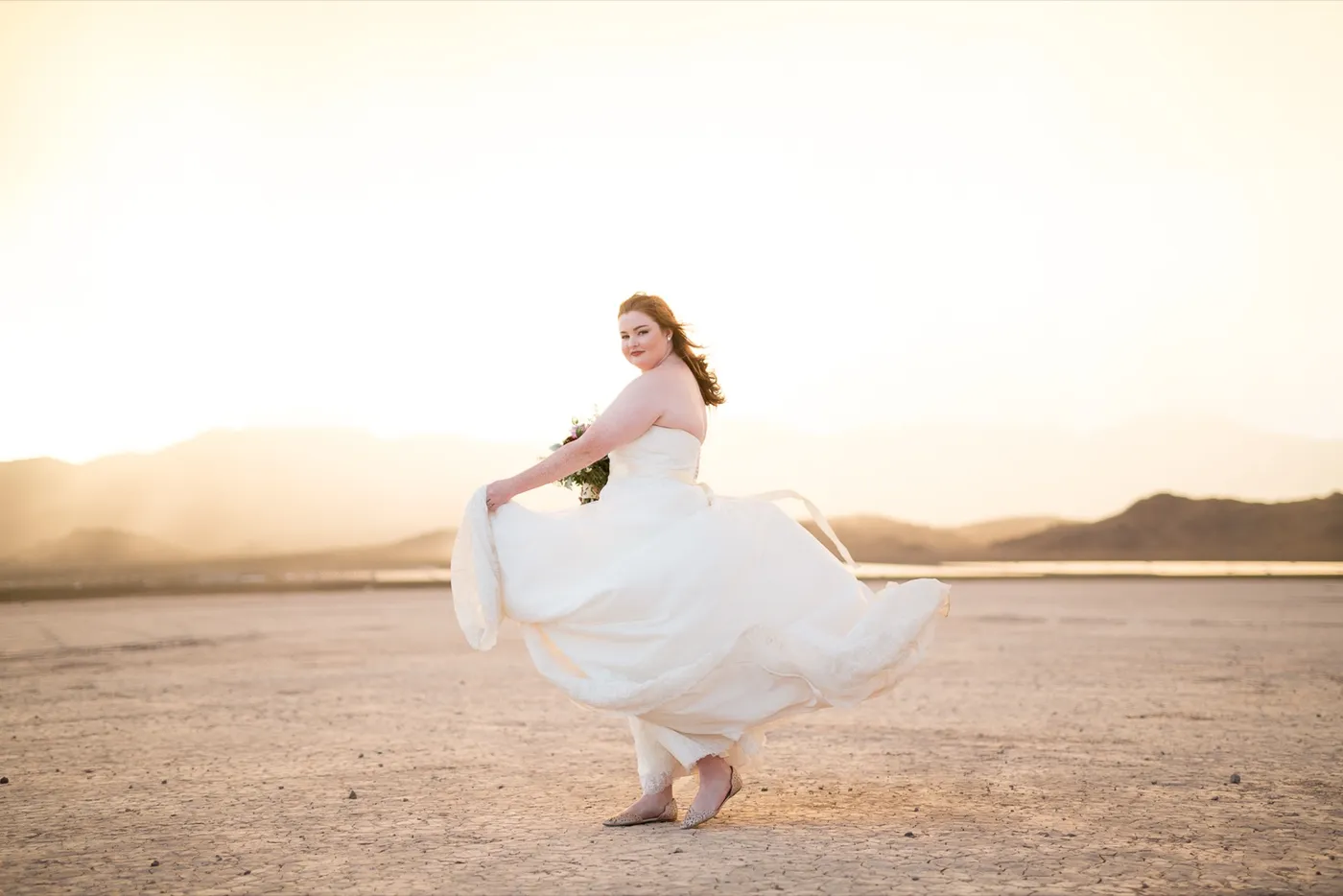
For most of the year, the best time of day for a Las Vegas elopement is the last hour before sunset. Summer is the exception. From June through September, sunrise is the better ceremony, because July highs average 104 degrees and the sun does not go down until close to 8 at night. I’m McKenzie, a Las Vegas native who has photographed weddings since 2009, over 300 of them. I work in natural light, so the hour you start shows up in every photo you get back.
Golden hour lands at a different clock time every month here. Sunset in Las Vegas runs from about 4:27 in the afternoon in the middle of December to 8:00 at night in the middle of June, which is a swing of three and a half hours. So your start time depends on your date. It also depends on your spot, because some of the places couples want to get married close their gates before the good light arrives. One more thing about that last hour, because it is easy to misread. It is the hour you want to be photographed in, not the hour you say your vows. The ceremony starts before it, about ninety minutes before sunset, so it is finished by the time the good light arrives.
Picking the month is a separate question. If you are still choosing one, I wrote about the best time of year to get married in Las Vegas separately. And if you have not settled on a place yet, start with where to elope in Las Vegas.
Sunrise, midday, sunset, or after dark?
| Time slot | What the light does | How hot it is | How busy it is | Who it fits |
|---|---|---|---|---|
| The hour after sunrise | Low and warm, coming in from the side. Soft on faces, and nobody squints. | The coolest hour of the day. About 82 degrees on a normal July morning. | The quietest hour at the desert spots. Red Rock needs no timed entry reservation before 8 a.m. | Summer dates, desert ceremonies, couples who want to be alone out there. |
| Midday, roughly 11 a.m. to 3 p.m. | Sun high overhead. Hard shadows under eyes and noses, and the red rock loses its color. | Hot the whole way through, and still climbing toward the afternoon peak. | The busiest hours at Red Rock and Valley of Fire. | Chapels and anywhere indoors. A ceremony built around a flight or a license pickup. |
| The last hour before sunset | The best light of the day. Low, warm and soft, and it keeps going for about half an hour after the sun is down. | Cooling off, though a summer evening is still hot. | Busy at the scenic spots, and everyone has to be out by the same closing time. | Most couples, October through May. |
| After dark | No daylight at all. Neon signs, casino marquees and streetlights do the work. | The most comfortable summer option after sunrise. | The Strip and Fremont Street stay crowded at every hour. | The Strip, Fremont Street and chapels. Anyone who wants the city lights in the pictures. |
The last hour before sunset wins most of the year for a simple reason. The sun is low enough that the light comes at you sideways instead of straight down, so nobody squints and nobody has a shadow cutting across their face. That is also the light my own work is built on. Light and airy photos need soft light to start with, and midday sun in the open desert is hard light.
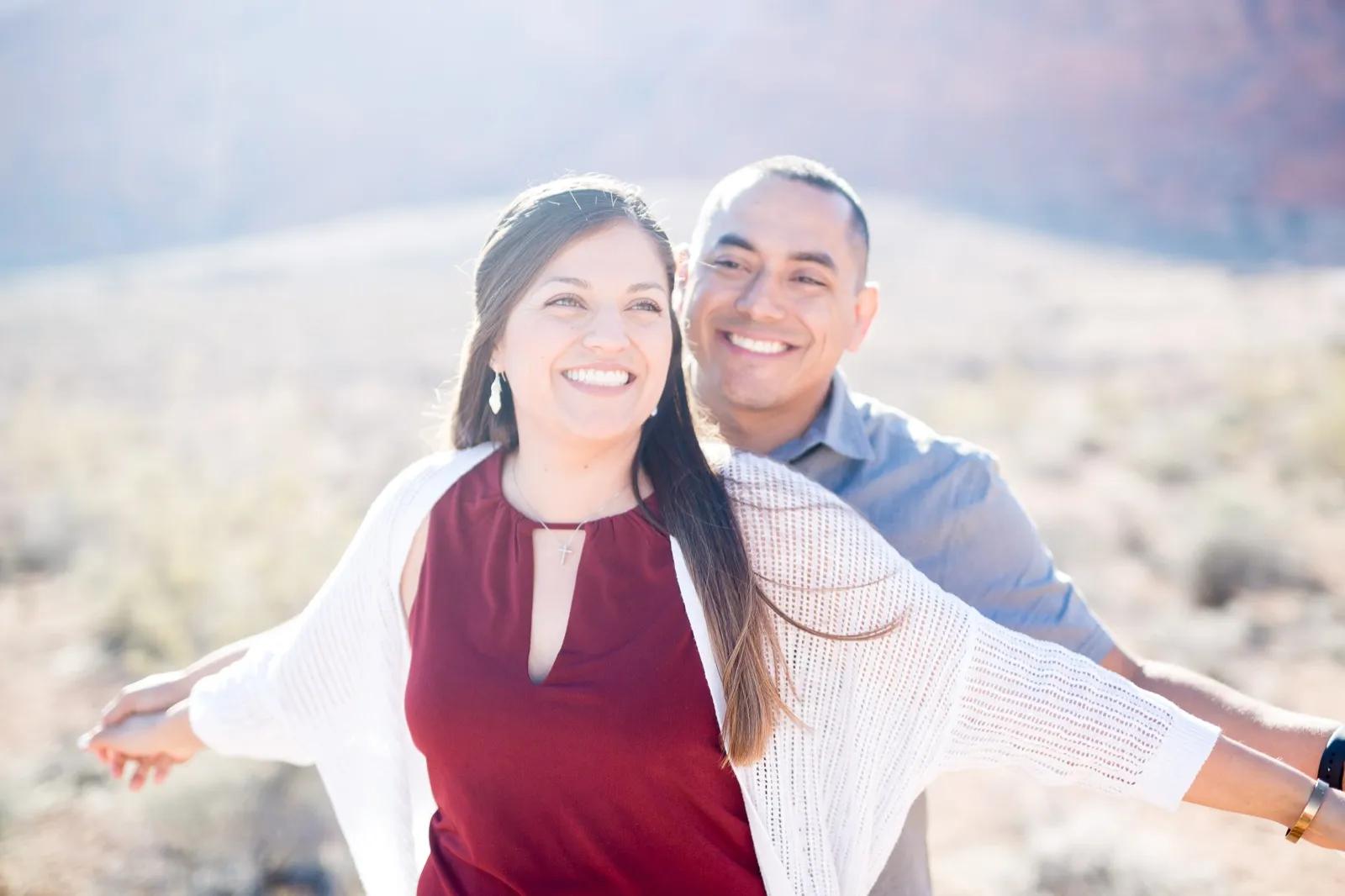
Crowds change with the hour too, and the desert and the Strip run on opposite schedules. In the desert, early morning is the quietest it gets. Red Rock’s own rules are built around that: the timed entry reservation the Scenic Drive requires in the cooler months does not start until 8 a.m. The Strip goes the other direction. It is busy all day and busier after dark, so an evening ceremony there means people walking past you, and those people end up in the background of your photos.
When is golden hour in Las Vegas?
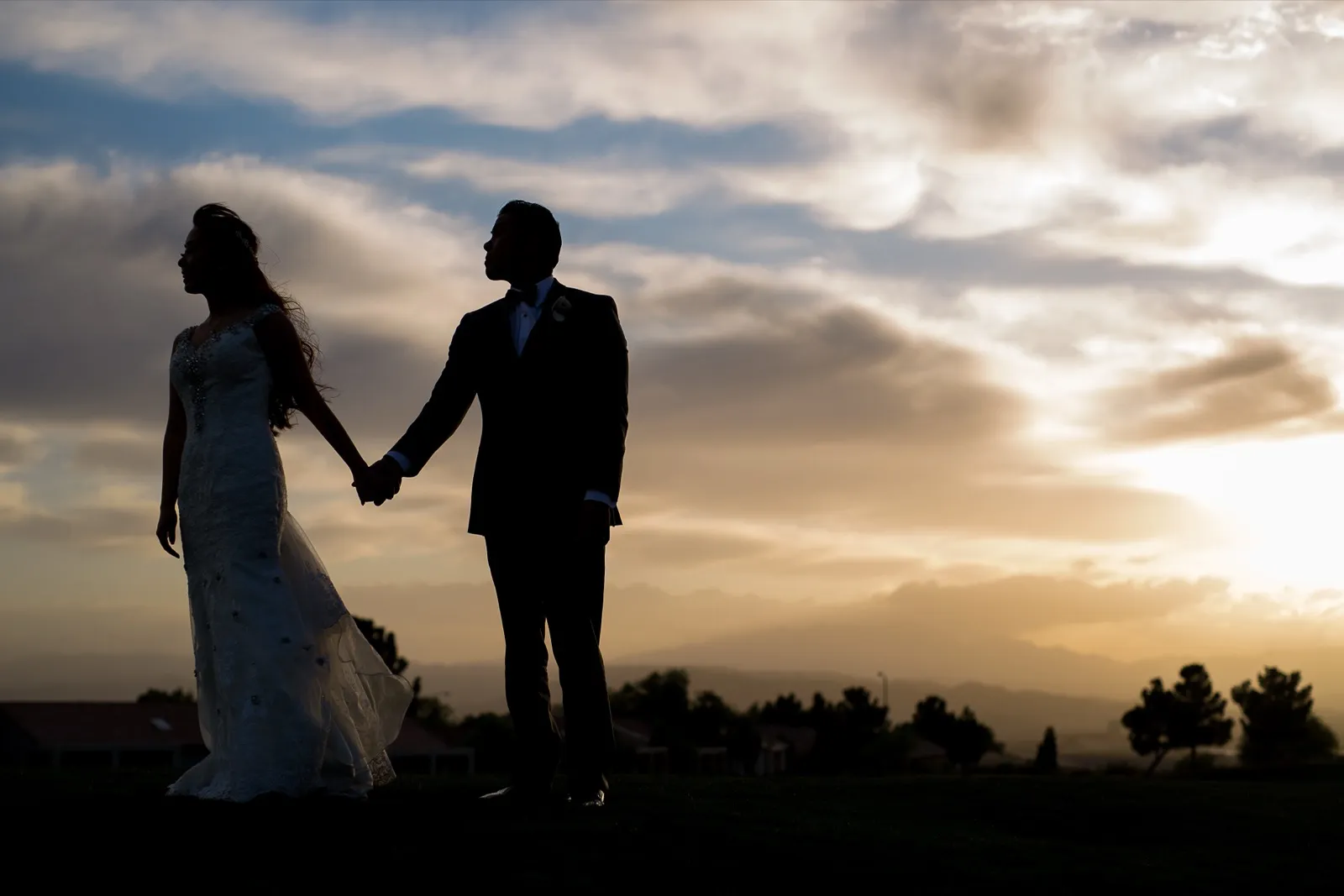
Golden hour in Las Vegas starts roughly an hour before sunset and runs until the sun is down, and then you get another 26 to 30 minutes of usable light after that. That extra stretch is civil twilight, when the sun is just below the horizon and there is still usable light without any lamps. It lasts 26 to 30 minutes here depending on the month, so your photos do not stop when the sun does. Sunset is the part that moves through the year, from 4:27 p.m. in the middle of December to 8:00 p.m. in the middle of June.
Here is the whole year, using the 15th of each month:
| Month, on the 15th | Sunrise | Sunset | Light gone by |
|---|---|---|---|
| January | 6:51 a.m. | 4:50 p.m. | 5:18 p.m. |
| February | 6:28 a.m. | 5:22 p.m. | 5:49 p.m. |
| March | 6:51 a.m. | 6:48 p.m. | 7:14 p.m. |
| April | 6:07 a.m. | 7:15 p.m. | 7:41 p.m. |
| May | 5:34 a.m. | 7:40 p.m. | 8:09 p.m. |
| June | 5:23 a.m. | 8:00 p.m. | 8:30 p.m. |
| July | 5:35 a.m. | 7:58 p.m. | 8:27 p.m. |
| August | 5:59 a.m. | 7:30 p.m. | 7:57 p.m. |
| September | 6:23 a.m. | 6:47 p.m. | 7:13 p.m. |
| October | 6:48 a.m. | 6:04 p.m. | 6:30 p.m. |
| November | 6:18 a.m. | 4:32 p.m. | 5:00 p.m. |
| December | 6:45 a.m. | 4:27 p.m. | 4:56 p.m. |
If your date falls within a week or so of the 15th, that row is good to about ten minutes and you can plan straight off it. Sunset moves fast in some months, though. Across September it comes 43 minutes earlier from the 1st to the 30th, and across August it moves 36 minutes. So if your date sits near either end of a month, or anywhere in March or November when the clocks change, look up your own day and use that number instead.
How to work backward from sunset to a start time
Take your sunset time and back it up about ninety minutes. That is when your ceremony starts. Elopement vows do not take long, so you finish them right as the last hour before sunset begins. That whole hour then goes to portraits.
Here are two examples with real numbers. Both of them work backward far enough to tell you what time your day has to start.
An elopement on October 15. Sunset is 6:04 p.m. and the light is gone by 6:30. Your ceremony starts at 4:30 and you are married by about 4:50, which leaves you the best hour of the day plus the half hour after it for photos. Now go backward. Standing in place at 4:30 means parked and walking in by about 4:15. Then add the drive out. Valley of Fire is the farthest of the desert spots, about an hour from the Strip, so leaving your hotel around 3:15 covers it. Before that comes getting dressed, plus hair and makeup, which runs two or three hours for most couples. That puts the start of your day around noon.
An elopement on December 15. Sunset is 4:27 p.m. and the light is gone by about 4:56. Your ceremony starts at 3, you are married by about 3:20, and you are walking back to the car in the last of the light. Every step of the October example slides an hour and a half earlier: parked by 2:45, out of the hotel by about 1:45, hair and makeup starting late morning. That feels early, and it is. In December the whole outdoor day is finished by five, so plan dinner and anything else you have in mind for the dark.
If you have to choose between the two, put the portraits in the best light rather than the ceremony. The two are doing different jobs. Ceremony photos are about what is happening, so they work whenever the ceremony happens, and I shoot them as they come. Portraits are about how the two of you look, and that depends on the light more than on anything else. Portraits are also the part of the day you can move on the clock, so move them to the best hour.
That is also why I talk most couples out of a ceremony that starts at sunset. If your vows begin when the sun goes down, the best light of the day gets spent while the two of you are standing still facing an officiant. By the time you turn around for photos, it is over. And if anything runs late, even by a few minutes, there is that much less light left when you are finally free to take pictures.
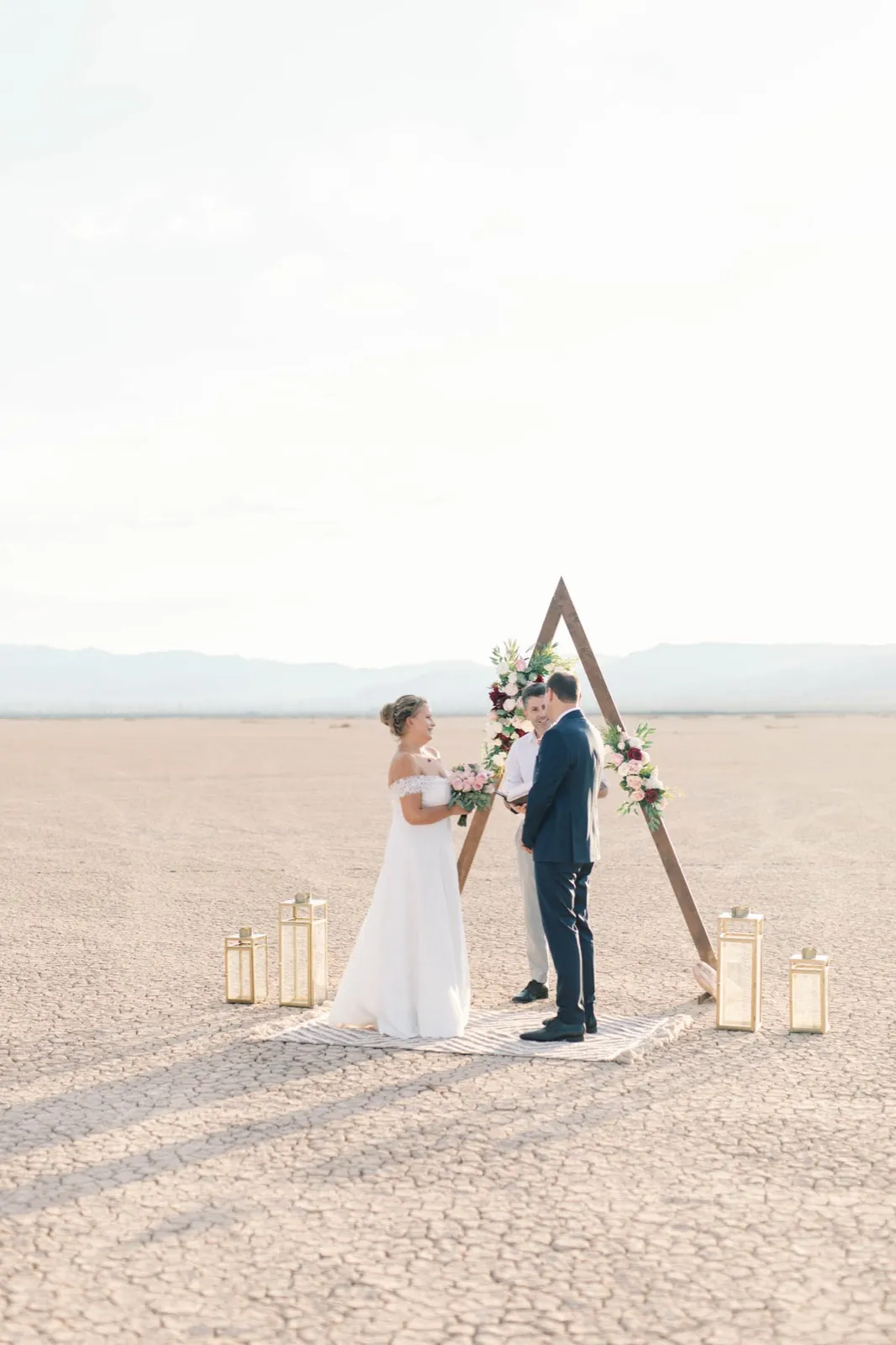
What closes before sunset
On public land, the gate hours matter as much as the sun does, and winter is when that causes the most trouble.
Red Rock Canyon’s Scenic Drive opens at 6 a.m. every day of the year, and closing time changes with the season:
- November 1 through the end of February: closes at 5 p.m.
- March: closes at 7 p.m.
- April 1 through September 30: closes at 8 p.m.
- October: closes at 7 p.m.
Put that 5 p.m. winter closing next to the sunset times in the table. Sunset in that stretch runs from 4:27 p.m. in December to 5:22 p.m. in the middle of February, so a sunset ceremony inside the loop goes from very tight in December to not possible at all by February. The Scenic Drive also has a second requirement on top of the gate hours. From October 1 through May 31 you need a timed entry reservation to drive the Scenic Drive between 8 a.m. and 5 p.m., reserved ahead of your date, and it lifts entirely from June 1 through September 30.
Red Rock has four permitted ceremony sites, and one of them comes with a published ceremony window. The Visitor Center Amphitheater takes weddings from 9 a.m. to 4:30 p.m., with the last ceremony slot starting at 3:30 p.m. and ending by 4:30. The other three sit outside the Scenic Drive loop: the Overlook on State Route 159, and the Red Spring Platform and Ash Spring in Calico Basin. You reach all three from the highway, which saves you the entrance fee and the timed entry reservation. The Overlook and Calico Basin publish their hours too, and they match the Scenic Drive’s season for season. So the closing times in the list above are your closing times whichever site you pick, and being outside the loop buys you no extra daylight.
So if you are looking at a February date at Red Rock, here is the time you can write down today. The amphitheater takes a ceremony that starts at 3:30 and ends by 4:30. Anywhere else at Red Rock, plan on being back at your car by 4:30 so you are out by 5. Neither of those is golden hour, and in February at Red Rock there is no version that is. Every wedding out there needs a permit from the Bureau of Land Management, and I walk through that whole application in my Red Rock Canyon elopement guide.
Valley of Fire has one rule instead of Red Rock’s several, and it is a tighter one. The park is open sunrise to sunset. So the 26 to 30 minutes of soft light after the sun goes down, some of the prettiest light of the day, is not available to you inside the park. You need to be driving out while you can still see the road. The park also sits about an hour from the Strip. On a December date that means a 4:27 p.m. sunset with an hour of driving on each side of it, so the trip takes your whole afternoon and you drive home in the dark.
So the time you can actually stand out there on your own date comes down to two numbers. One is your sunset, from the table above. The other is your closing time. At Red Rock that is the seasonal closing in the list above, and at Valley of Fire it is sunset itself. Whichever of the two comes first is your real deadline, and your ceremony starts about ninety minutes before it. From November through February those two numbers land within an hour of each other at Red Rock, so check both and take the earlier one. In those months you are getting married in the middle of the afternoon. March is the month the two numbers cross. The gate closes at 7. Sunset is 6:48 on the 15th, just before it, and 7:02 on the 31st, just after it, so by the end of the month the gate closes before the sun does. May looks clear and is not quite. The gate closes at 8, sunset is 7:40 on the 15th and 7:52 on the 31st, so the afterglow you get to use shrinks from twenty minutes to eight. April, September and October are the months the gate is not your problem, and you can plan around the light alone.
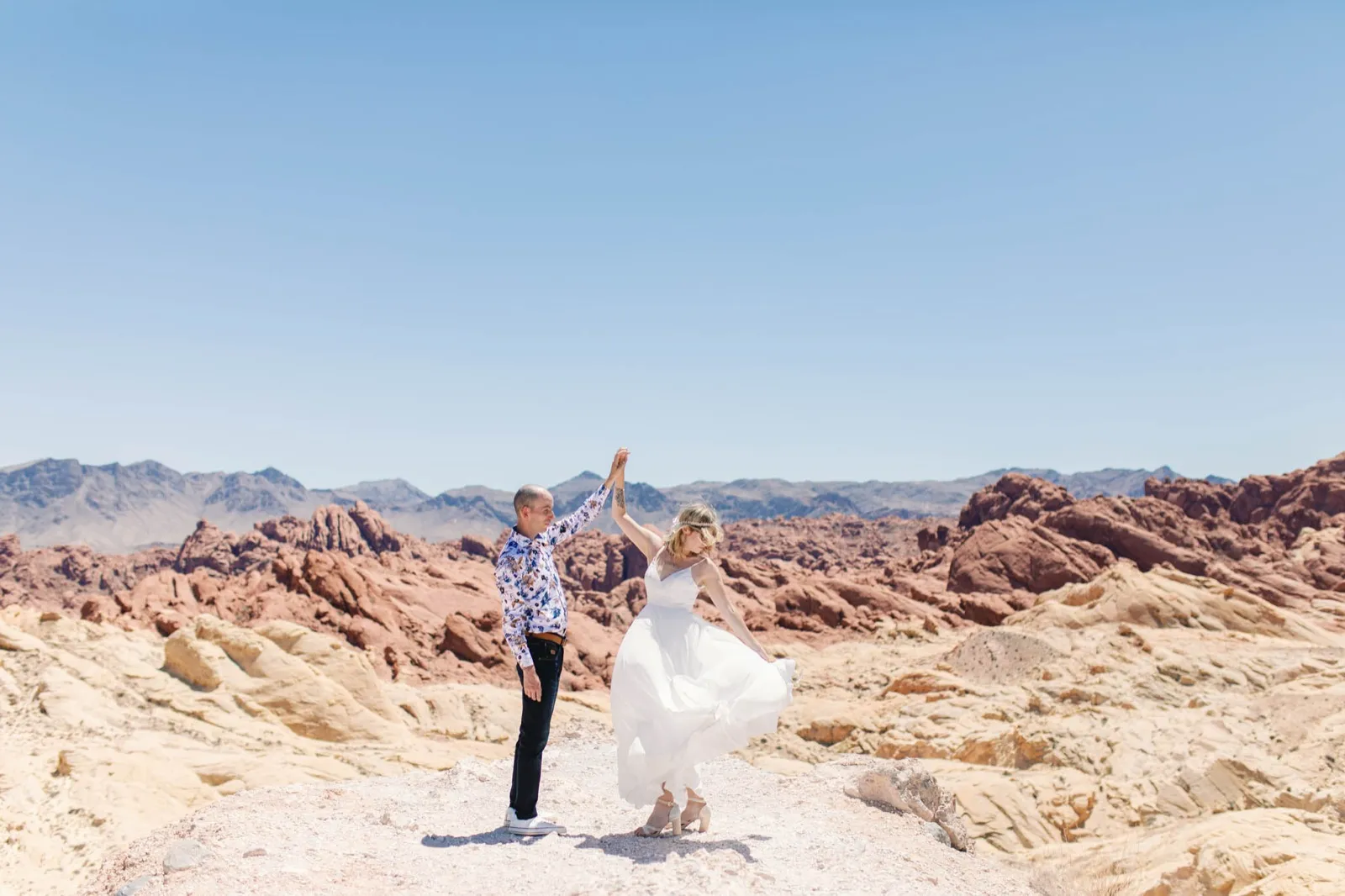
Summer flips the answer to sunrise
From June through September, I recommend sunrise instead. Here is why. July is the hottest month in Las Vegas, with a normal high of 104.5 degrees, and the National Weather Service tells people to avoid working hard outdoors between 11 a.m. and 6 p.m. Sunset in June is 8:00 p.m., so a golden hour ceremony does not even start until 6:30.
Sunrise is not cool out here, and I would rather tell you that than let you find out. The normal July low is 82 degrees, and in the desert that low happens right around sunrise. Eighty two degrees is warm enough to feel in a suit, so I am not going to tell you it is comfortable. It is 22 degrees cooler than the afternoon high, and that difference is what makes an hour outside in July possible at all.
There is a downside to sunrise, and it is how early your morning has to start. In the middle of July the sun comes up at 5:35 a.m. To be dressed and standing in place by 5:45, hair and makeup starts somewhere around 3 in the morning, and you are driving out to the desert in the dark. Some couples hear that and pick the evening anyway, which is a fine answer as long as you picked it on purpose.
Sunrise is an hour I work, in case that was the next question. On an elopement you pick the day and the time, and I am there for the hour you pick, at 5:45 in the morning the same as at 5 in the afternoon.
Sunrise inside Red Rock comes with one limit worth knowing about. The gate opens at 6 a.m. every day of the year, and from June through the middle of August the sun is already up before that, so a true sunrise ceremony inside the loop is not possible on those dates. The first hour after the gate opens is still low, warm light, and it is the closest you can get. Plan on being at the gate at 6 and starting a few minutes after. By September the sun is coming up at 6:23 and the gate is open ahead of it, so a September sunrise out there works the way you would expect.
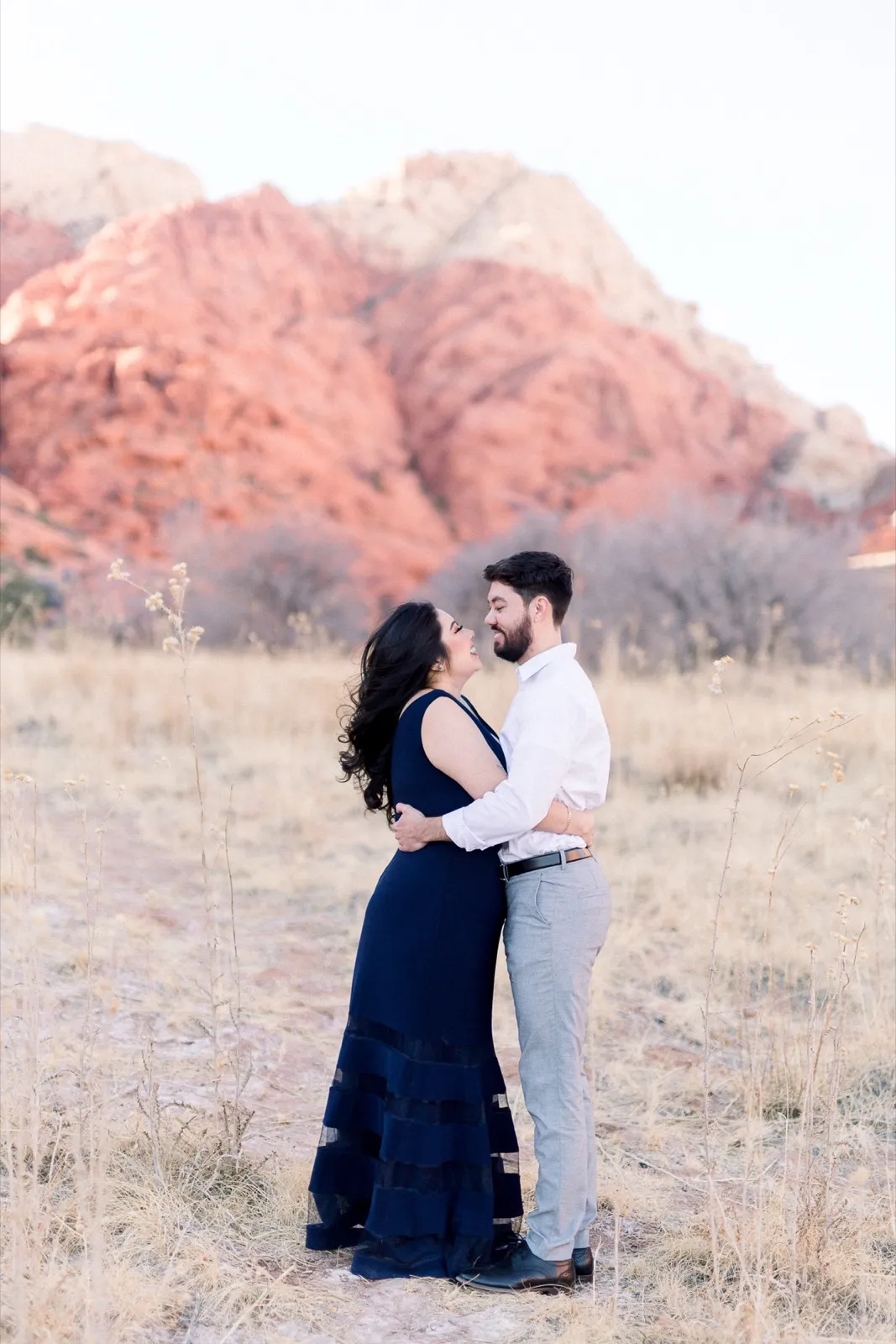
Eloping after dark in Las Vegas
Las Vegas is one of the few places where after dark is a real choice rather than a backup plan. Nevada’s marriage statutes put no limit on the hour a ceremony can happen, and the Clark County Marriage License Bureau is open 8 a.m. to midnight, seven days a week, every day of the year including holidays. A 9 p.m. ceremony is legal, and the bureau is still open that evening when you go pick up your license. It is also an hour I work, the same way sunrise is. There is more on the license itself in my guide to getting a Las Vegas marriage license.
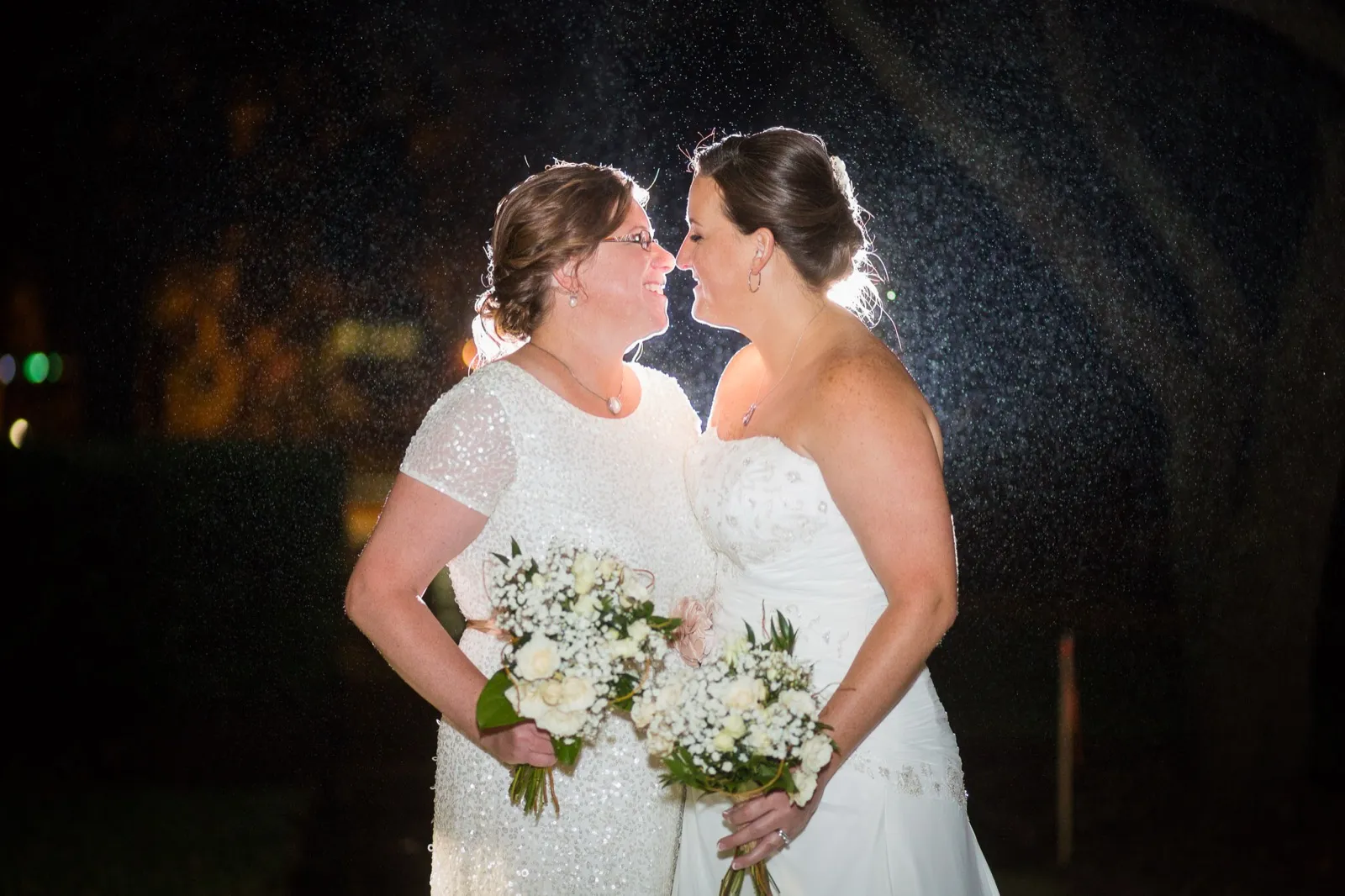
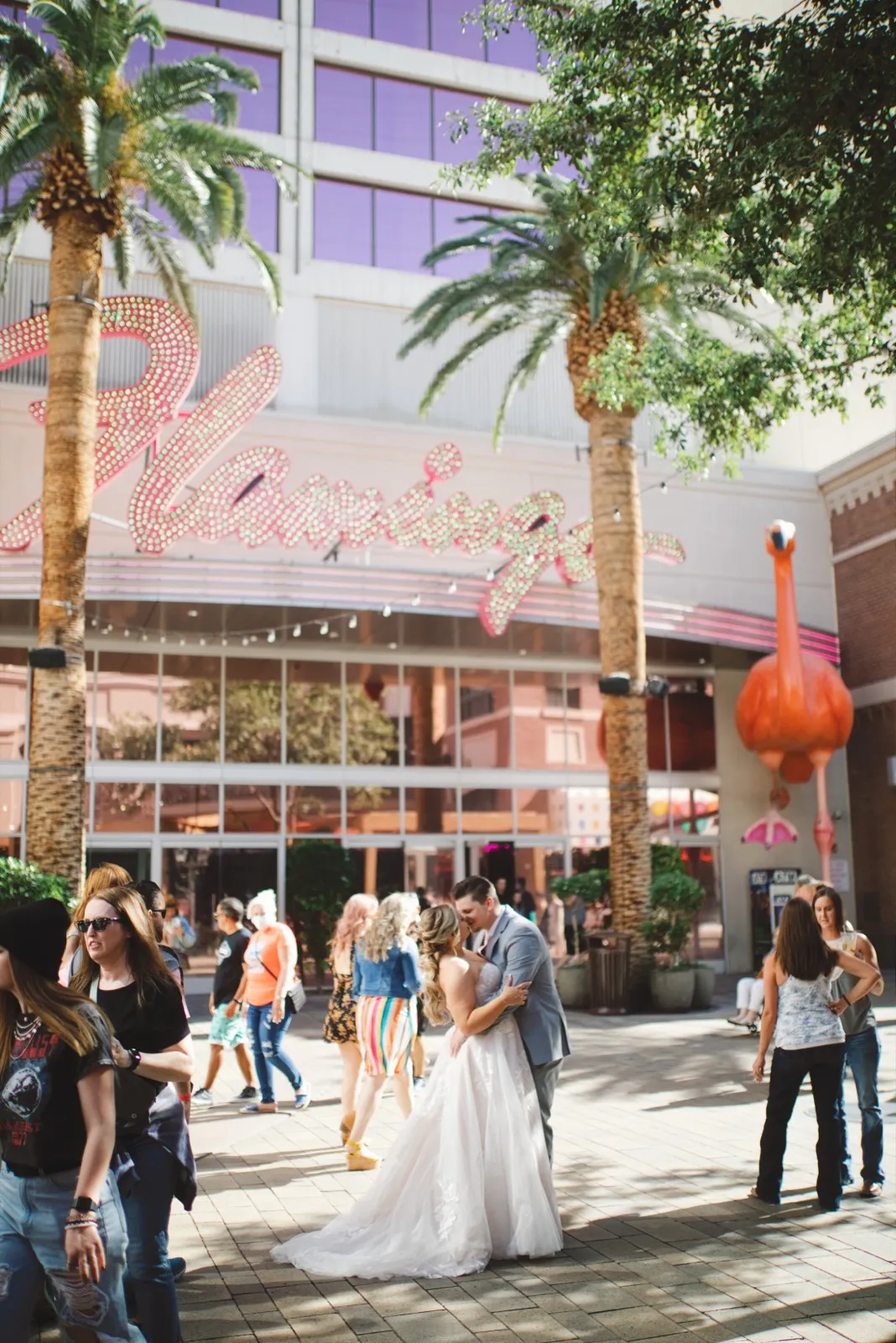
After dark is also the only time the Strip and Fremont Street look like the pictures you have in your head. The signs are the reason to be there, and once it is dark they are also your light. Whatever sign you stand in front of is the color that lands on your faces. In daylight those same blocks are buildings and traffic. I go through the individual stops and how many of them fit in an hour in my guide to Las Vegas Strip wedding photos.
A lot of couples ask whether they can do both in one evening, the desert while the sun goes down and then the Strip once it is dark. You can, and the drive between them is part of why it works. The desert light is finished about half an hour after sunset, and the signs are not bright enough to photograph by until the sky is fully dark, so you have a gap to fill either way. Valley of Fire sits about an hour from the Strip, and that hour is roughly how long the sky needs. Leave the park when the light goes and you arrive on the Strip right about when the signs take over.
Indoors, the hour stops mattering entirely. A chapel looks the same at 9 p.m. as it does at noon, and chapels run late. So if you are getting married inside, pick the hour that suits the rest of your day and stop planning around the light.
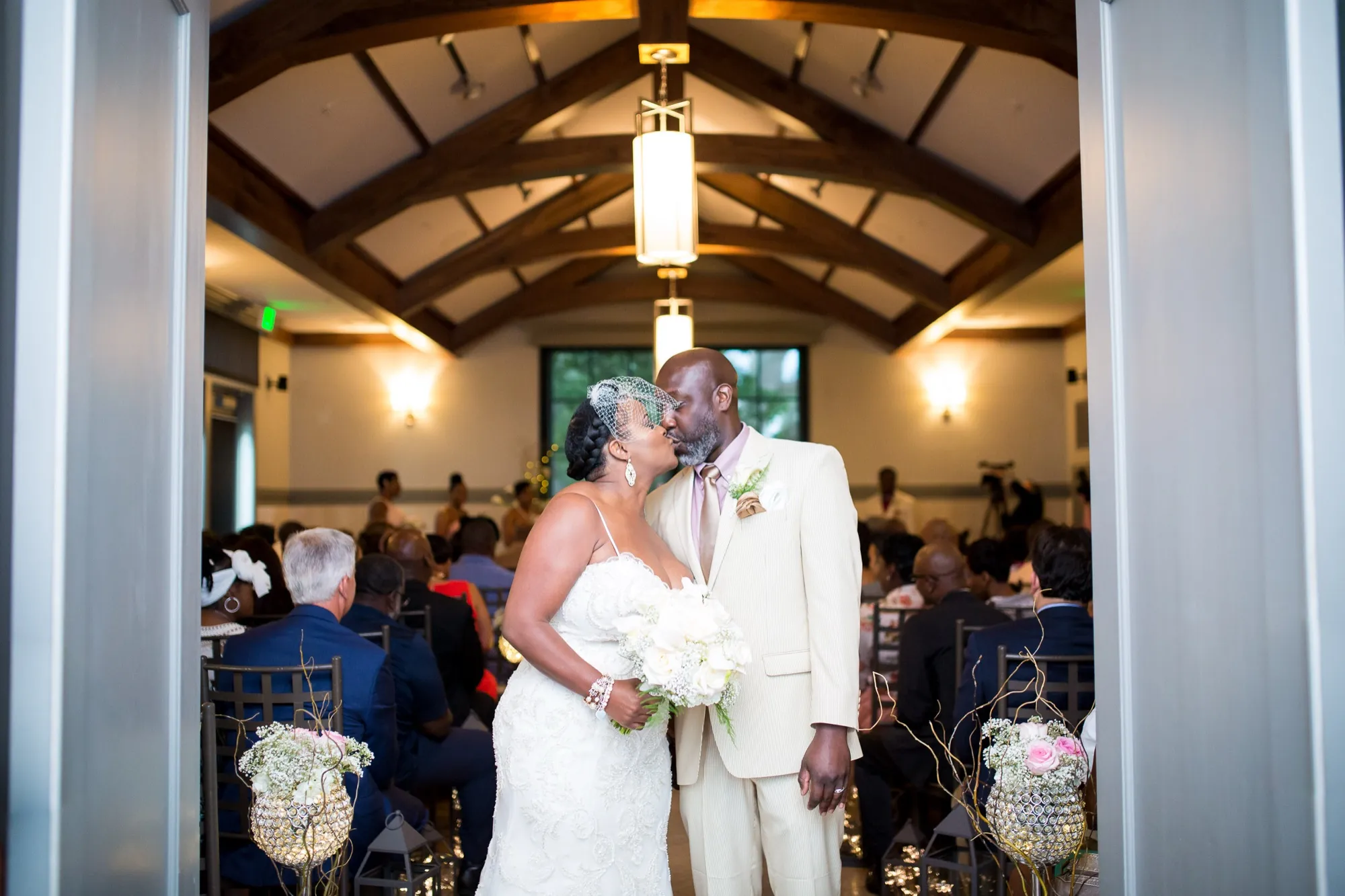
Tell me your date and I’ll tell you your hour
Send me your date and the spot you are picturing, and I’ll run the numbers with you: your sunset that day, the gate hours where you want to stand, and the time your ceremony has to start so the portraits land in the good light. I have been shooting in this valley since 2009, so for most dates it takes me about a minute, and I’ll tell you honestly if the hour you had in mind does not work.
If the desert is where you are leaning, look at the photos from each place before you settle on a time, because the light in them is what you are choosing between. Red Rock Canyon, Valley of Fire and the dry lake beds each have their own page here with the full set of photos I have from that place: Red Rock Canyon, Valley of Fire and the dry lake beds.
If you just need photography, that is on my elopements page, and what a whole elopement day runs is in my Las Vegas elopement cost guide. If you would rather not assemble the day yourself, our all inclusive Las Vegas elopement starts around $2,000 for an hour outdoors, and which hour is exactly the question this article is about. You pick the day and the time, and we place it against your sunset.
Either way, reach out and tell me what you’re planning.