
September 13, 2026
Four Seasons Las Vegas Weddings: A Photographer's Guide
Four Seasons Las Vegas weddings, from a Las Vegas wedding photographer: the spaces, the size limits the hotel publishes, the cost, and when the light is good.
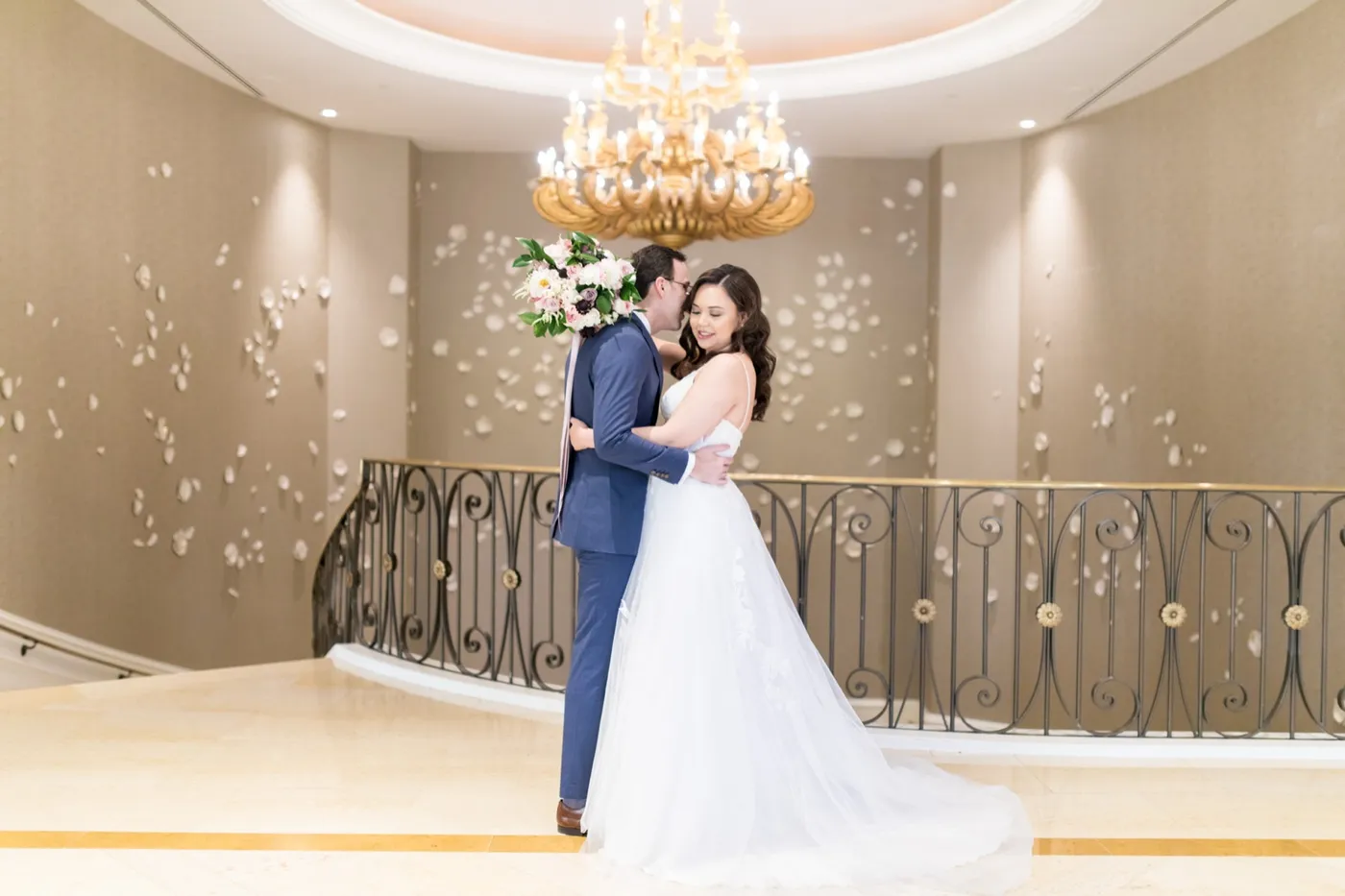
Four Seasons Hotel Las Vegas occupies floors 35 through 39 of the Mandalay Bay tower at 3960 South Las Vegas Boulevard, at the south end of the Strip. It runs as its own hotel inside that building, with its own driveway, entrance, lobby and elevators. There is no casino in it and no smoking in it. Weddings here run from a ceremony for a handful of guests in a suite up to a full ballroom reception. The hotel says its spaces host ceremonies and private receptions for 9 to 600 people.
I’m McKenzie Stewart, and I’ve photographed weddings for 17 years, more than 300 of them, including weddings at the Four Seasons. The firsthand parts of this guide come from photographing weddings at this property. The size and cost figures come from the hotel and the venue directories, collected here in one place instead of spread across five listing sites. Venue policies and prices change, so every number here is what those sources published when I wrote this.
The wedding spaces at Four Seasons Las Vegas
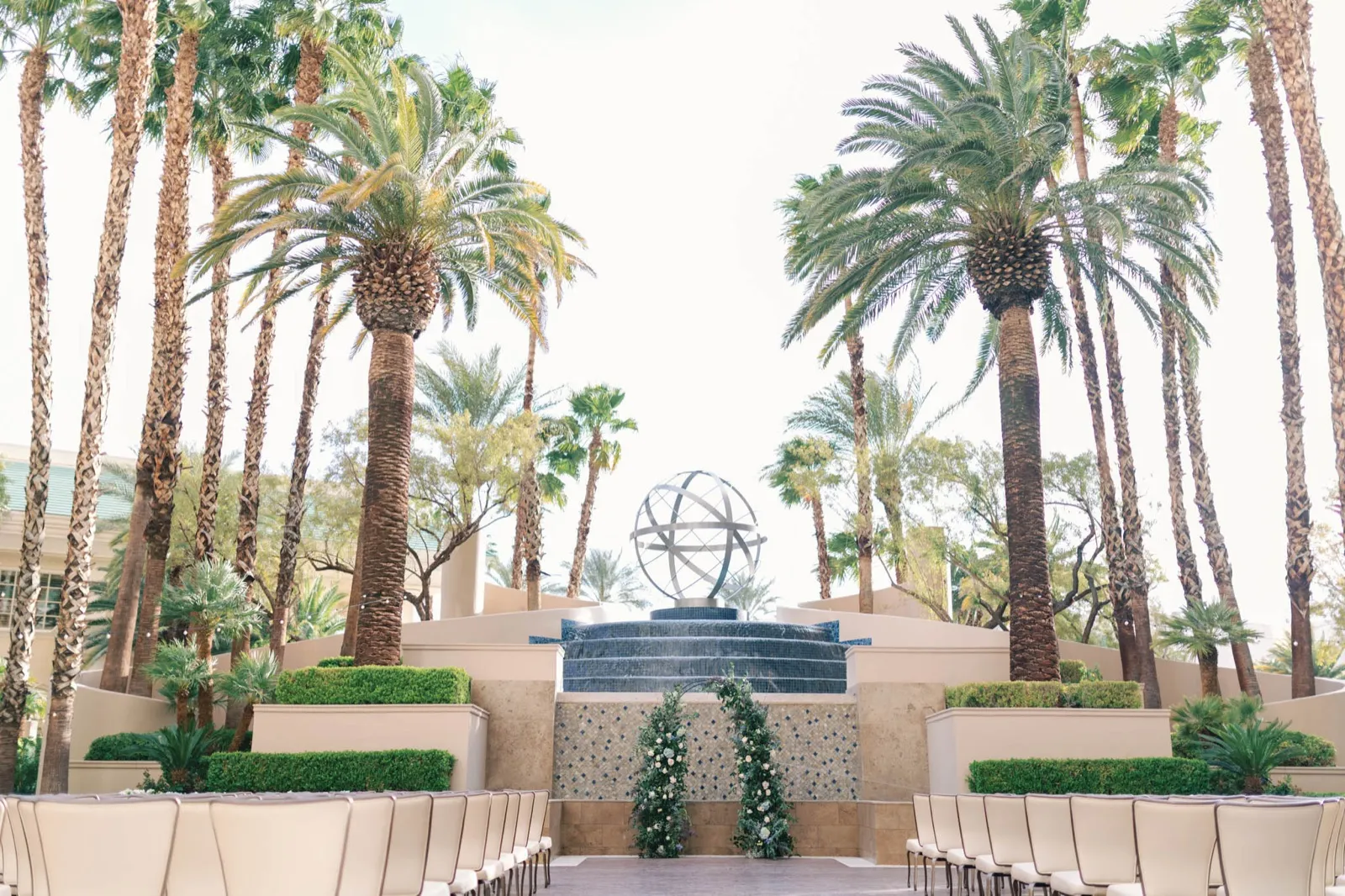
This property has several outdoor options, and the Fountain Terrace on the lobby level is the dedicated ceremony terrace among them, the one built around a waterfall. The hotel also markets a Poolside Veranda and Patio, a two level terrace it lists for outdoor ceremonies or receptions, and a North Balcony on the second floor, listed for an outdoor ceremony or a cocktail reception. The Mesquite Room’s glass doors open onto that balcony. Everything else you can hold a ceremony or a reception in here is a room inside the building. The hotel lists more than 20 event spaces in total, and these nine are the ones weddings use.
| Space | Indoor or outdoor | What it suits |
|---|---|---|
| Fountain Terrace | Outdoor, lobby level | The property’s dedicated ceremony terrace. A patio built around a waterfall, with flowing water features, seasonal flowers and tropical greenery. |
| Poolside Veranda and Patio | Outdoor, lobby level | A two level terrace the hotel lists for outdoor ceremonies or receptions. |
| North Balcony | Outdoor, second floor | The hotel lists it for an outdoor ceremony or a cocktail reception. The Mesquite Room opens onto it. |
| Mesquite Room | Indoor, second floor, opens outside | An indoor ceremony or a smaller reception where you still want daylight. Large windows and glass doors onto a balcony above the pool gardens. |
| Palm Room and Palm Lounge | Indoor | A reception for a smaller group that would feel lost in a ballroom. Arched ceilings, wood paneling, oversized windows and a marble bar. |
| Cottonwood Room | Indoor, second floor | A smaller ceremony or a private reception. The hotel lists it for intimate wedding ceremonies and smaller celebrations. |
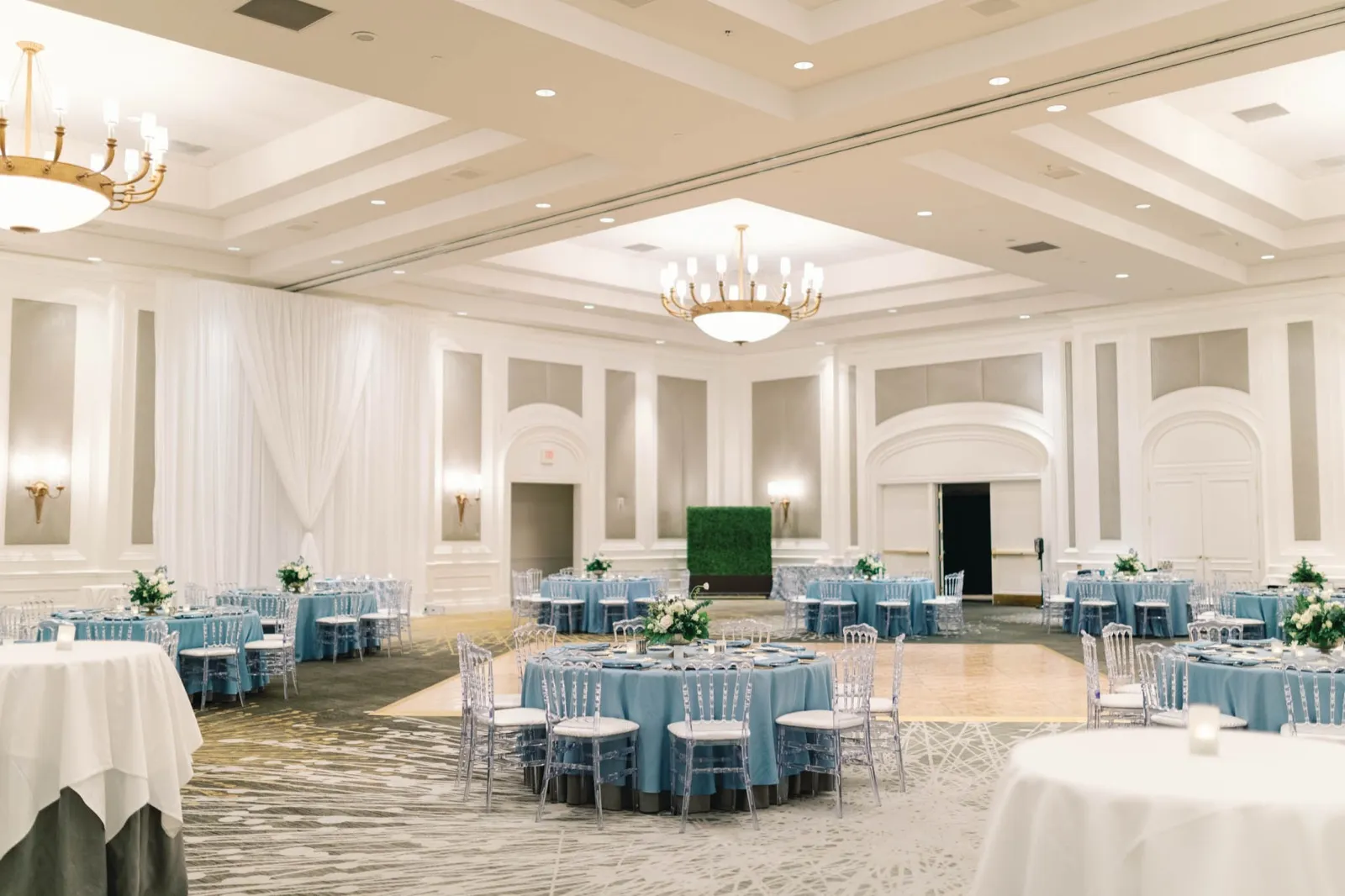
| Acacia Ballroom | Indoor, second floor | A large seated dinner. The hotel puts it at 5,250 square feet and up to 300 guests in rounds. It divides in two, so a smaller wedding can use half of it. |
| Four Seasons Ballroom | Indoor, second floor | The largest seated dinner on the property. The hotel puts it at 10,080 square feet and up to 600 guests in banquet rounds. |
| Penthouse Suite | Indoor, 38th and 39th floors | A ceremony for a small group, in a suite with floor to ceiling windows and panoramic views over the city. |
Guest count is usually the question that decides whether a venue stays on your list, so here are the numbers the hotel publishes about its own spaces. Across the property, it says it hosts ceremonies and private receptions for 9 to 600 people. It describes its venue range as running from an intimate meal for 10 up to an outdoor banquet for 200. The biggest room for a seated dinner is the Four Seasons Ballroom, which the hotel puts at 10,080 square feet and up to 600 guests in banquet rounds. The Acacia Ballroom, on the same floor, is 5,250 square feet and seats up to 300 in rounds, and it divides in two if you want half of it. The Penthouse Suite is 2,100 square feet, and the hotel does not publish how many seated guests that works out to.
Be careful comparing numbers across venue listing sites. Some of them publish seated capacities for individual rooms here that run well above what the hotel itself says the same space holds. The hotel’s figures are the ones I would plan against, and the seated number for the room you want is worth getting from the hotel in writing.
If you are also weighing resorts away from the Strip, I wrote a similar guide to Green Valley Ranch weddings in Henderson.
What does a wedding at Four Seasons Las Vegas cost?
The hotel publishes a starting point, and when I wrote this its wedding pages said weddings start from $2,750 for 50 guests. That figure is the least a small ceremony can cost, not what a full wedding day comes to. I could not find a published list of what it includes.
For a reception, the number that decides your budget is the food and beverage minimum. That is a dollar amount you commit to spending on catered food and drinks, and if your guests do not eat and drink their way to it, you pay the difference anyway. The venue directory Here Comes the Guide reports food and beverage minimums at this property running from about $15,000 for the smaller spaces up to about $75,000 for the largest one. That listing carries no date, and it is a directory’s reported figure rather than a quote from the hotel, so treat it as a rough sense of scale. Even at the low end of it, a reception here means committing five figures to food and drink before you have paid for a dress, flowers or a photographer.
Where your wedding lands inside that range depends on five things: which space you book, your date, the season, how many guests you have, and whether you are serving lunch or dinner. A lunch reception generally carries a lower minimum than a dinner reception in the same room. Most couples never think to ask about that, and it is worth asking. Hotel catering is also normally quoted before tax and a service charge, so the minimum is not the final number on your bill.
Photography is usually the next line item after the venue, and I publish my rates openly on my pricing page.
Do you have to use the hotel’s wedding planner?
Yes, in one sense: the hotel’s planning page describes couples working with its wedding specialists on the details, and those specialists are on the hotel’s own staff. What is not clear is whether you also have to hire a planner or a coordinator of your own.
Three different people can be called a planner at a hotel wedding, so it helps to separate them. The first is the hotel’s wedding specialist, the staff member described above. The second is your own wedding planner, someone you hire to plan the wedding with you over the months leading up to it. The third is a coordinator who runs the day itself, keeps the schedule and handles the vendors on site.
The hotel’s own planning page does not state a requirement to hire either of those two that I could find, and it says couples may connect with its wedding specialists for guidance. One venue listing does describe a planner as required here, and the hotel’s own pages do not, so ask the hotel plainly whether you are required to hire the second person or the third, since both of them are people you pay.
Nevada also requires a valid marriage license in hand before an officiant can perform your ceremony, and I covered what Nevada asks for in a separate article.
Can you bring your own photographer to Four Seasons Las Vegas?
Yes. Outside photographers are allowed at Four Seasons Las Vegas. The hotel keeps a list of recommended vendors who have worked at the property, but nothing describes that list as exclusive, and the hotel’s own planning language says couples are welcome to choose their own vendors as long as they are reputable and insured.
There may be a fee, though. The one venue listing that addresses the policy says an outside photographer is allowed and a fee may be required. No one publishes what that fee is, so you cannot look it up before you call. A hotel like this one will also normally ask every outside vendor for a certificate of insurance, which any working wedding photographer already carries.
Where the light is good at Four Seasons Las Vegas, and when
Sunset in Las Vegas moves by about three and a half hours across the year, so the right ceremony time in December is not the right one in June. The latest sunsets happen in late June, at around 8 in the evening, and the earliest happen in early December, at around 4:30 in the afternoon. A four o’clock ceremony sits in low, soft light in December and in full hard daylight in June. Look up sunset for your actual date before you pick a ceremony time. If you are still choosing a month, I go through the seasons in my guide to the best time of year to get married in Las Vegas.
Fountain Terrace
Time of day matters more outdoors than it does in any room inside. On the terrace, your ceremony time is what decides how the photos look. Under direct overhead sun, people squint, faces pick up hard shadows from their own brows and noses, and a white dress loses its detail. None of that can be edited out afterward. In the last two hours of daylight the sun comes in low and sideways instead of straight down. Faces are lit evenly, the dress keeps its detail, and nobody has to squint. That is the window I would aim for on this terrace.
Mesquite Room and Palm Room
These two rooms have real daylight in them. The Mesquite Room has large windows and glass doors that open onto a balcony over the pool gardens. The Palm Room has oversized windows and feels more like a large living room than a function space. For a daytime ceremony or a lunch reception, that window light is what produces the light and airy photos I shoot, often with no flash in the room at all. Window light has one catch. Direct sun coming straight through the glass is just as harsh indoors as it is outdoors, so it helps to know which direction your room faces and roughly when the sun is on those windows.
Acacia Ballroom and the interior rooms
When a room’s light comes from its chandeliers rather than its windows, the hour outside stops mattering, and that gives you more freedom than you might expect. A room lit by chandeliers looks the same at two in the afternoon as it does at nine at night, so an indoor ceremony can happen at any hour without the sun affecting it. That means you can put the ceremony where it suits your guests and still step outside for twenty minutes at the best part of the day for portraits.
The 39th floor
The Penthouse Suite sits at the top of the hotel with Strip views out the windows. A room with a big view is harder to photograph than it looks. In daylight the window is much brighter than the room, so exposing for the people leaves the view washed out, and exposing for the view leaves the people dark. The view is easiest to photograph once the sun is off the windows and the brightness outside and the brightness inside come closer together, and again after dark once the Strip is lit.
How to time your wedding day around sunset
Here is one example of how a day gets built so the portraits land in good light. Your ceremony time is often set by your venue contract or your family before a photographer is involved, so treat this as an example rather than a schedule to copy.
- Look up the sunset time for your exact date. Everything else counts backward from that one number.
- Start an outdoor ceremony about an hour before sunset. That keeps the sun off your guests’ faces and out of your ceremony photos.
- Do family photos immediately after the ceremony, while everyone is still standing in one place. Twenty to thirty minutes covers most family lists.
- Send guests to cocktail hour and do wedding party photos next.
- Save the last of the daylight for just the two of you. Protect that time on the schedule, because it is the first thing that gets cut when the day runs late.
- Head into the reception as the light goes. If you want a photo with the Strip lit up, step out again for ten minutes after dark.
Getting ready at the hotel
The biggest time cost of a Las Vegas wedding day is moving people from one place to another, and getting ready in the same building where you are getting married takes that out of the day. Two things make a hotel room work for the morning. The first is a window with daylight, because a dim room lit only from the ceiling is some of the hardest light of the day to work in. The second is floor space, since a room fills up fast once you add dresses, a hair and makeup setup, and everybody’s family. The elevators here are private to the Four Seasons, so the trip from your room down to your ceremony never crosses a casino floor.
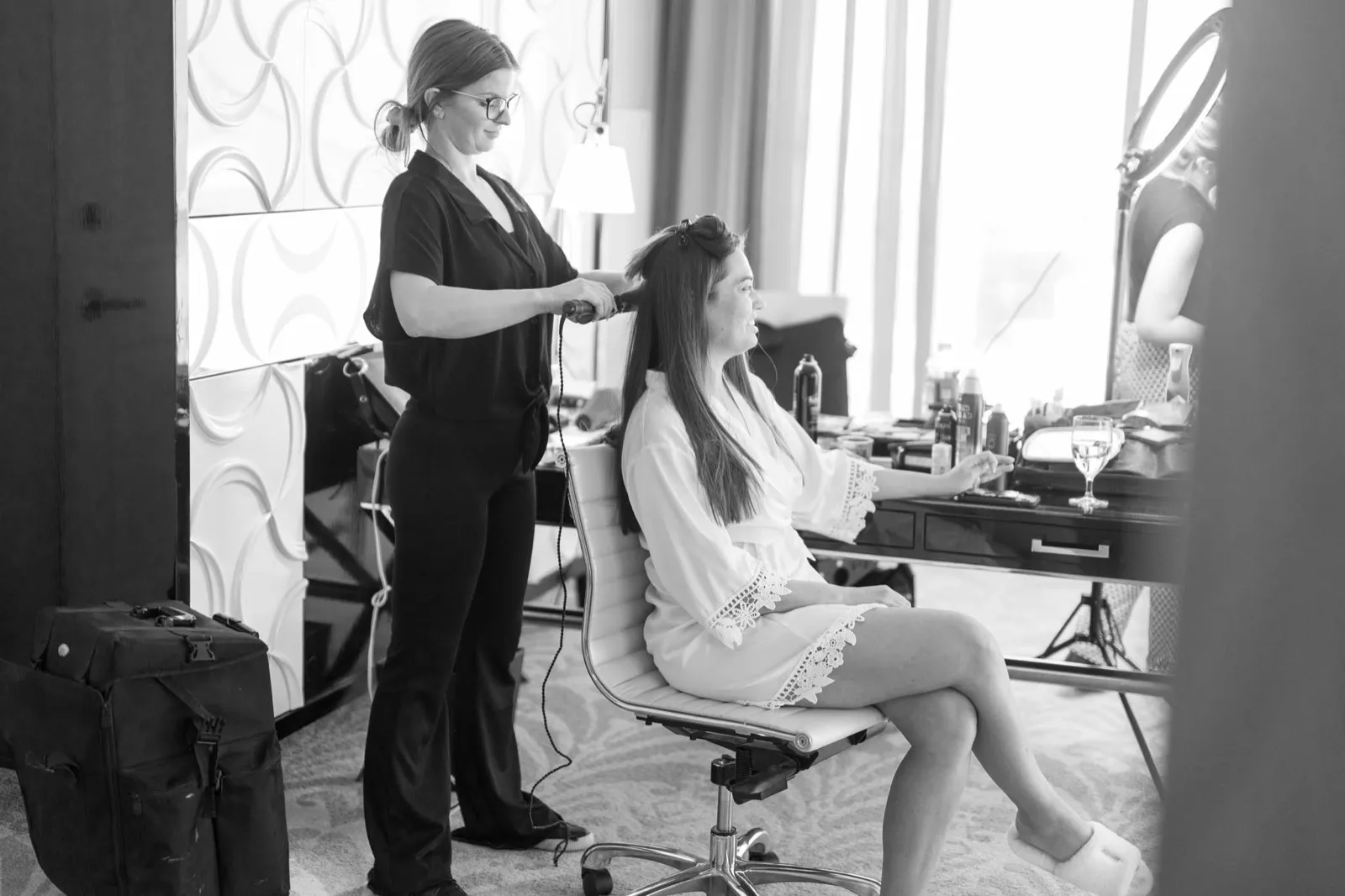
Photo spots on and near the property
The best photo locations at this venue are on the property itself. The Fountain Terrace with its waterfall and greenery, the balcony off the Mesquite Room above the pool gardens, and the windows on the high floors give you three completely different backdrops without anybody getting into a car. The Four Seasons lobby also connects to Mandalay Bay’s public areas through a private passageway.
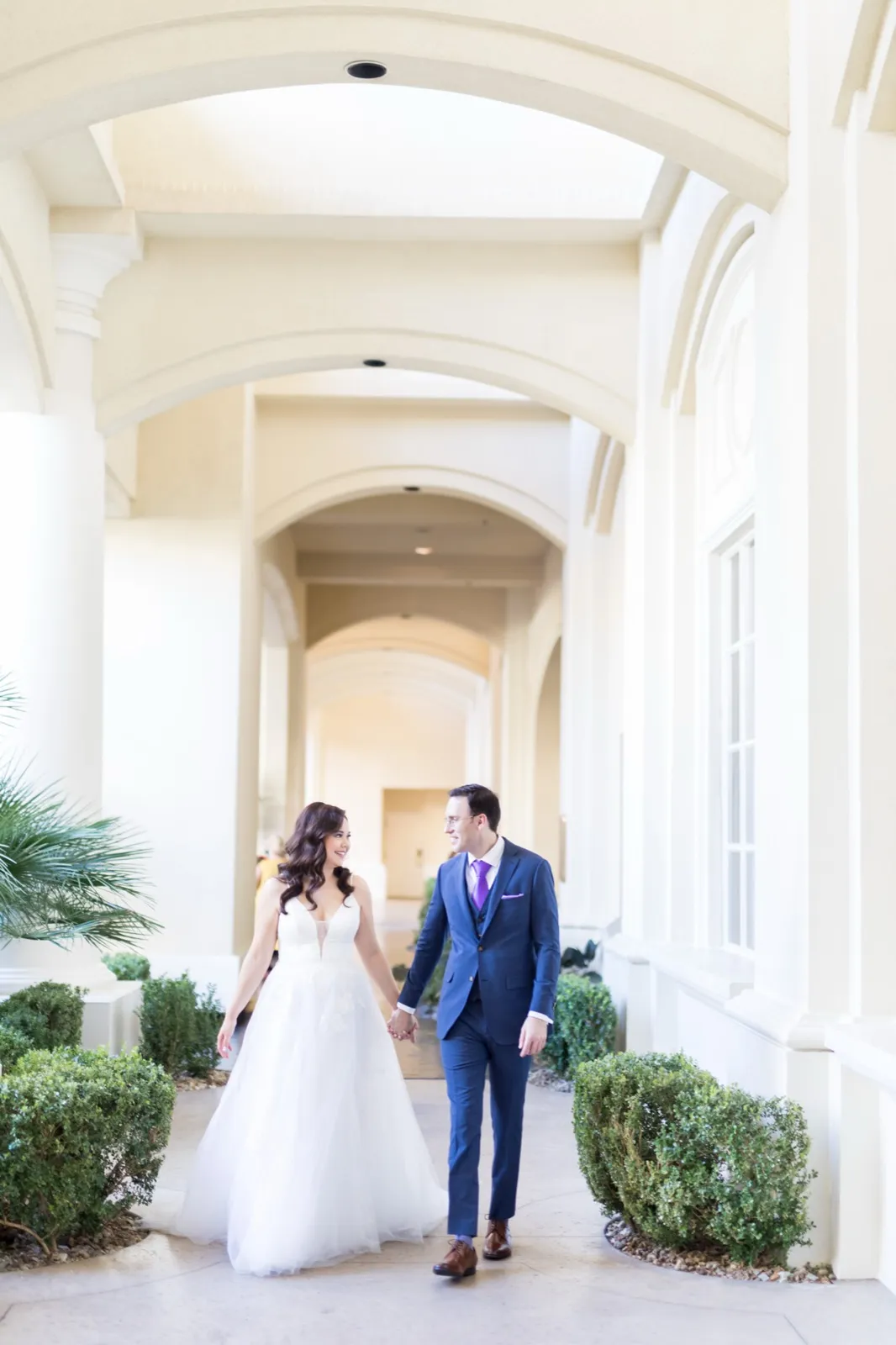
The Strip skyline is the exception, because this property sits at the south end of Las Vegas Boulevard rather than in the middle of the Strip. The row of famous casinos is not right outside the door. From the high floors you get that view through a window. At street level, the classic Strip backdrop means leaving the property, so it needs its own planned block of time in your schedule, and I wrote about how to do that in my guide to Las Vegas Strip wedding photos.
The rain and heat plan for an outdoor ceremony
If your ceremony is on the Fountain Terrace between June and September, plan around the weather. Normal high temperatures in Las Vegas run around 100 degrees in June, around 104 to 106 in July, around 104 in August and around 96 in September. On top of the heat, the monsoon season runs from late June into September and is most active in July and August, bringing higher humidity and scattered afternoon and evening thunderstorms. Total rainfall is small, so most days in that stretch have no storm at all, but a storm is possible on any given afternoon.
Between the heat and the storms, I would hold a summer ceremony on that terrace in the evening rather than the afternoon. Your indoor backup also matters more in summer than it would in April. A backup room that has never been named or reserved may well not be sitting empty and ready for you on a Saturday afternoon in July.
What to confirm with the hotel before you sign
The hotel can answer all of this in one phone call. These are the seven things worth getting in writing.
- The seated ceremony capacity and the seated dinner capacity of the specific room you want. They are usually different numbers.
- What the published starting price actually includes, and whether it is still current.
- The food and beverage minimum for your room, your date and your guest count, and whether a lunch reception lowers it.
- Whether tax and a service charge get added on top of that minimum, and at what rates.
- Whether you are required to hire your own wedding planner or a coordinator for the day, in addition to the hotel’s specialist.
- The outside vendor policy, any fee that attaches to an outside photographer, and any certificate of insurance they require.
- Whether an indoor room is held as your weather backup, whether it costs extra, and when on the day the call gets made.
Let’s talk about your day
If Four Seasons Las Vegas is on your list, I’d love to hear what you’re planning. Tell me your date, the space you’re looking at and roughly how many people are coming, and I’ll tell you honestly what I think about the timing. Eight hours is the most common length of wedding coverage I book, and on a day timed around sunset like this one, eight hours usually covers getting ready through the first part of the reception. Las Vegas and Henderson are home for me, so there is no travel fee anywhere in Clark County. I hold dates only for couples whose venue and date are confirmed, so once that contract is signed, send me a message and we’ll find a time to talk.