
October 7, 2026
What to Wear for Engagement Photos in Las Vegas
What to wear for engagement photos in Las Vegas: how many outfits to bring, colors that show up against red rock and neon, what the evening asks for, and shoes.
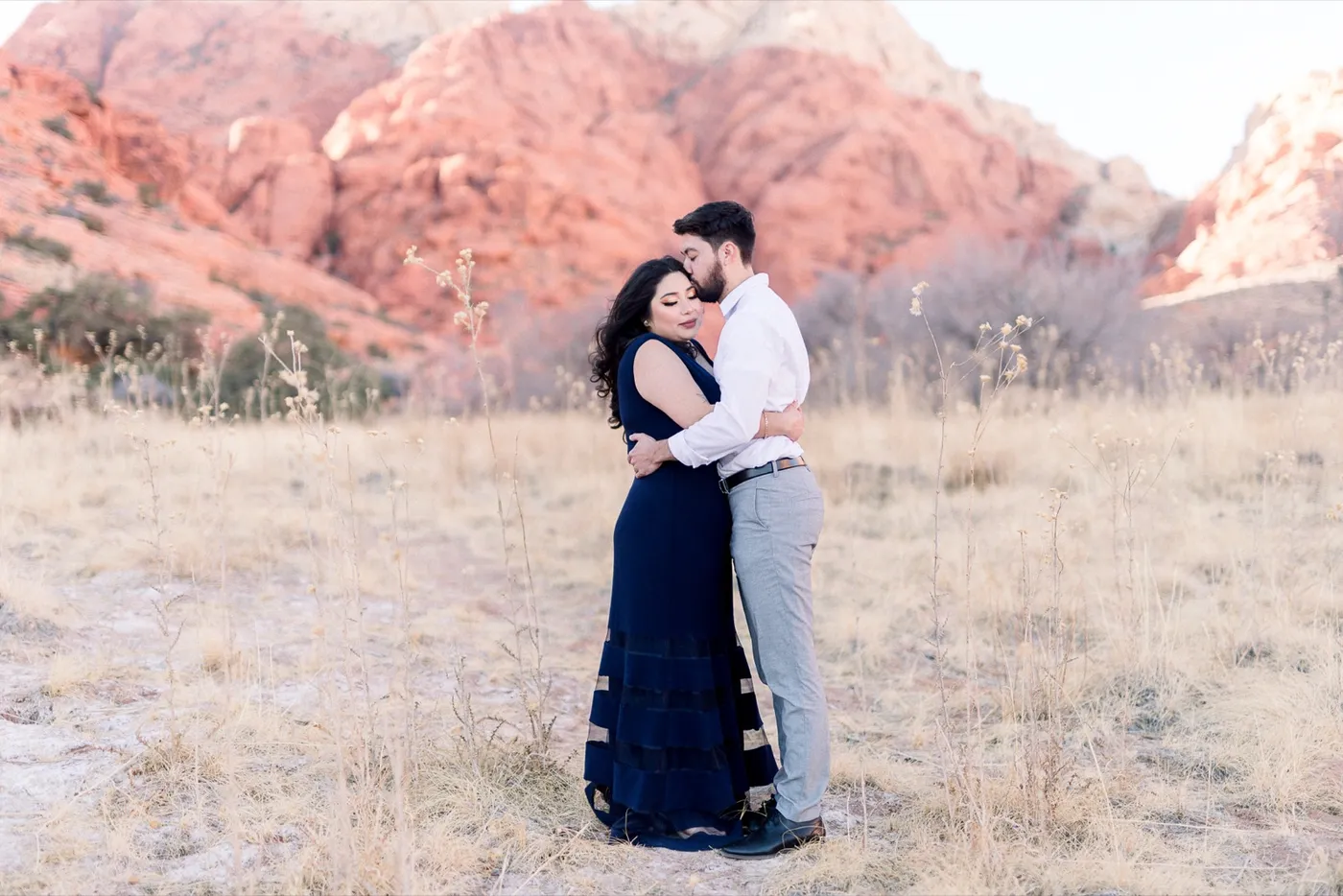
For engagement photos in Las Vegas, bring two outfits, which is one change. Choose colors that separate from the ground you’ll be standing on, keep the patterns simple, and bring shoes you can walk in along with the nicer pair you want in the photos. From May through September, loose and lightweight clothing is what keeps you comfortable. From December through February, bring a coat or a wrap you like the look of, because it will be in the pictures.
I’m McKenzie. I started my photography business here in Las Vegas in 2009 and I’ve photographed weddings every year since 2010, over 300 of them. That adds up to a lot of April sessions at Red Rock and a lot of July sessions downtown. Most of what you have to decide comes down to two things. The season sets your fabric and how covered up you are. The location sets your colors.
How many outfits should you bring?
Two, total. That is one change, and it’s what I recommend for almost every couple. Your session is an hour and a half, and I tell couples to block two hours because these run long, so one change fits without rushing. A third outfit means more time standing in a parking lot and less time holding hands somewhere pretty. The session time belongs to you, so it’s your call, but two is the number that works.
One change matters most if you’re wearing a dress. I often can’t tell how a dress is going to photograph until it’s on you in that light, so bringing a second one means you get to see both. More than once someone has brought two dresses and ended up loving the one they expected to like less.
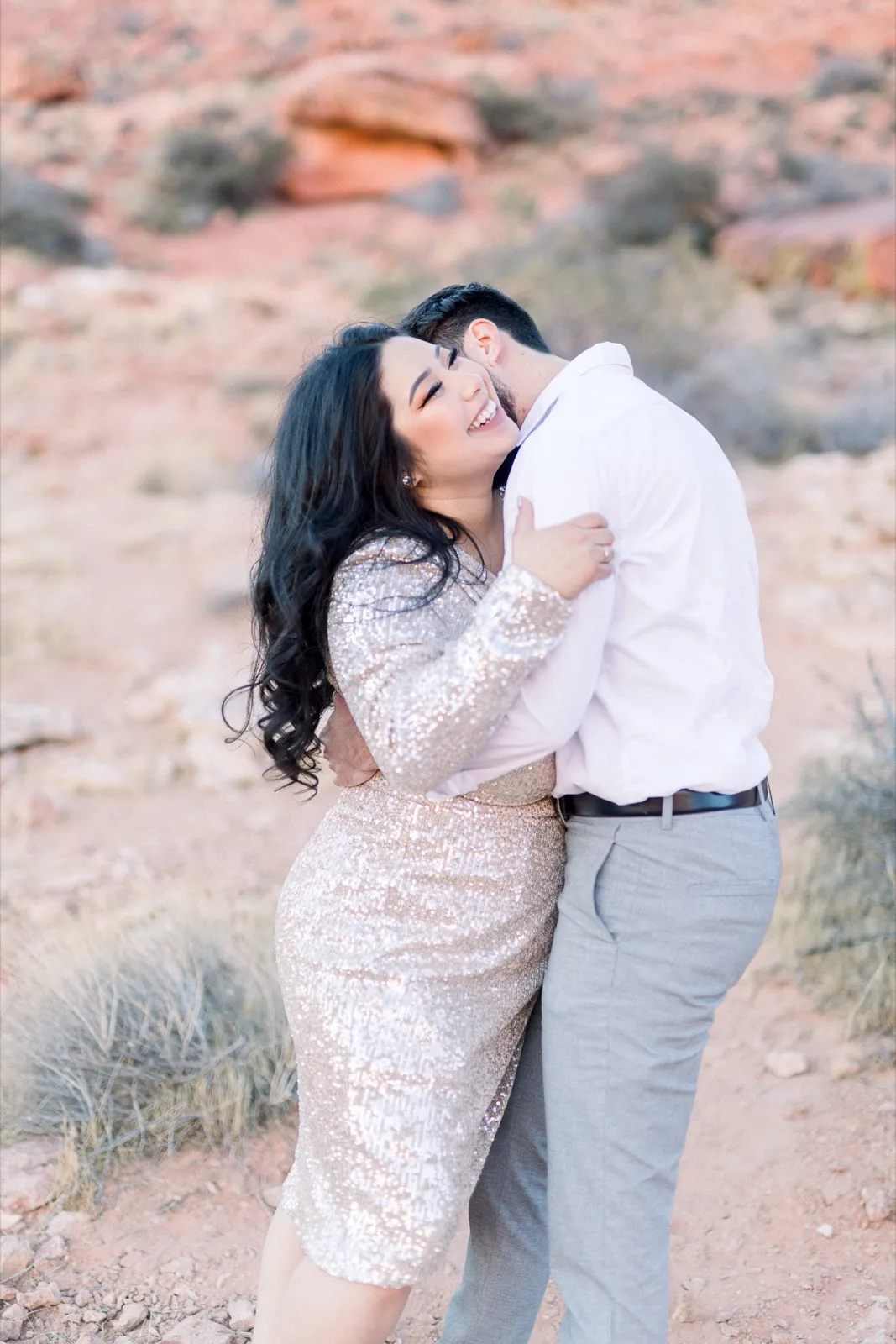
Only one of you has to change, and it’s usually whoever is in the dress. The other person can add or drop a layer, swap a jacket, or roll their sleeves, and the second half of the gallery will still look different from the first.
Plan the change so it’s fast and doesn’t need a room. Most people change in their car, so pick a second outfit you can get into in a back seat without help.
Should the second outfit be dressier or more casual?
Pick the two together, as a pair, instead of choosing a favorite and then finding a spare. You want the second half of your gallery to look different from the first, not like the same outfit in another color.
So make one dressier and one more relaxed: a long dress for one half, then jeans or a skirt and a nice top for the other. Put them in different colors. If we’re shooting two locations in one session, give each location its own outfit, since the colors that work at Red Rock are not the colors that work under neon. And if you care about one look more than the other, save it for the second half, when the light is better and you’ve both forgotten the camera is there.
How to coordinate with your partner without matching
Start with whichever of you has fewer options to work with, and build the other outfit around that one.
Three things make two outfits look like they belong together. The first is a shared color family, like blues and creams, or greens and warm tans. The second is different lightness. One of you goes lighter and one goes darker, so you separate from each other when you’re standing close. The third is a matching level of dressiness, and this is the one that goes wrong most often. A floor length dress next to a polo shirt and cargo shorts looks like a mistake in every frame. If one of you is dressed up, both of you are.
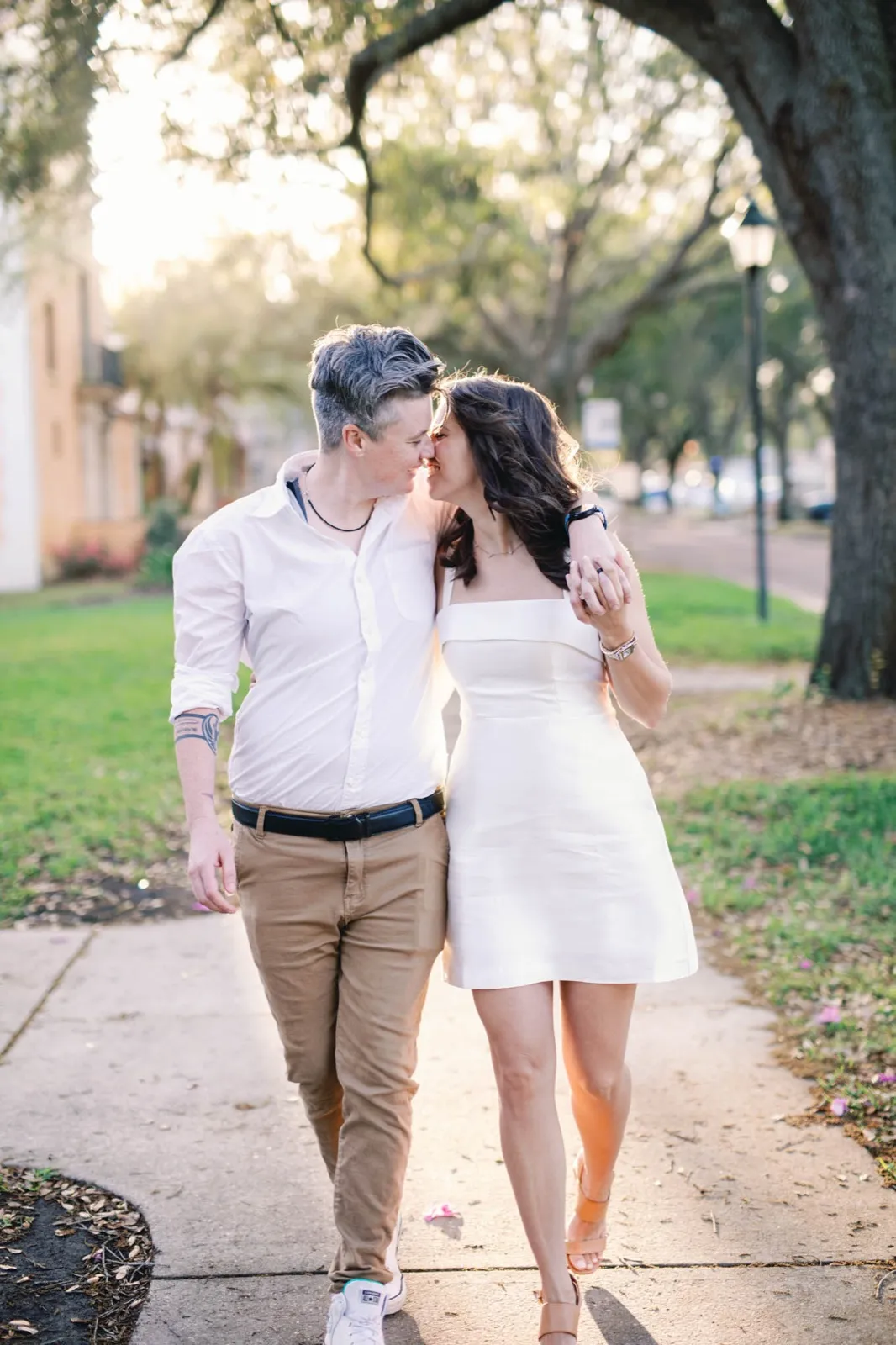
If your partner owns three shirts and does not want to do this, don’t send them shopping. Pull two things they already own and wear, and let them choose between the two. They can wear a shirt that fits at the shoulders with the sleeves rolled, and pants in a color that isn’t competing with your outfit. That’s enough for the whole session. Chinos, dark jeans, and a light suit all photograph well. In July, that means a linen or light cotton shirt with the sleeves rolled and light pants, or a suit worn without the jacket for the dressier version. Shorts look much more casual than a dress, so they only work if you’re both dressed that casually.
Clothes that fit you right now photograph better than clothes that fit at a size you’re hoping for, and that’s true at any size. I’ve written more about that in [this post about photographing plus size brides](/blog/wedding-photography-for-plus size-brides/). Being comfortable matters more than having the perfect outfit, because I don’t give you posing instructions. I give you prompts instead, like walking toward me or telling each other a story, and prompts only work when you can move freely. That comfort is part of why I want every couple to do an engagement session.
Dresses, jumpsuits, and what else works
A dress is the most common choice because fabric that moves looks good in photos, and out here there’s usually a breeze to move it. It isn’t the only thing that works, though, and one of these might suit you better:
- A long dress or maxi. It moves more than anything else you can wear, which is why so many desert photos have a skirt blowing in them. The tradeoff is the hem. It drags on dusty ground, and you’ll want a hand free to hold it when you walk.
- A midi. The easiest one to wear all session. It clears the ground, you can walk in it, and it still moves.
- A short dress. A short dress works well in town. Out on the rocks you’ll be managing the wind and your hem while you climb on things, so bring shorts to go under it.
- A jumpsuit. My pick for anyone shooting out in the desert who doesn’t want to think about a skirt. There’s no hem to manage, and you can sit down on a rock without arranging anything first.
- A skirt and top, or a two piece. A full skirt moves in the wind the same way a dress does. Check the outfit with your arms straight up before you commit, because that’s when a waistband gap or a slipping top shows up.
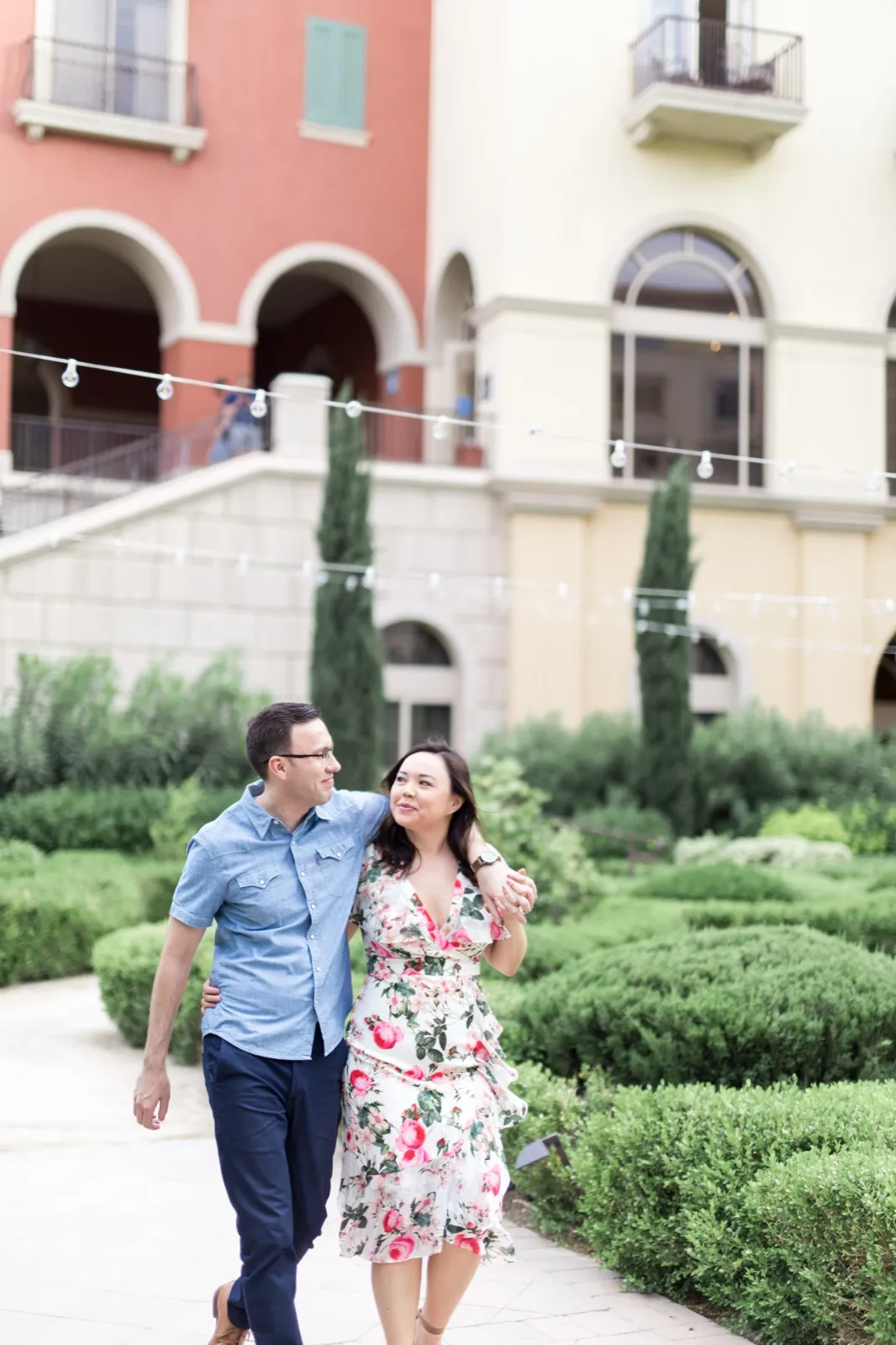
Any sleeve length works. Flutter, long, and sleeveless all photograph well, and a loose long sleeve is worth considering in summer for sun. For necklines, wear what you’d wear to dinner without thinking about it.
What to wear by season in Las Vegas
The season sets your fabric and how covered up you are. Here’s what to wear in each one, with long term averages for Las Vegas for the weather:
| Season | Typical weather | What to wear |
|---|---|---|
| Spring (March to May) | The windiest stretch of the year, April most of all. April highs average about 79 degrees, May highs about 89. | Layers you can take off, and a hem you can hold. Flowy is fine here, with something comfortable underneath. |
| Summer (June to August) | July highs average about 105 degrees and August about 103. Las Vegas gets about 78 days a year at 100 or hotter. | Loose, lightweight, light colored. Light long sleeves for sun. Nothing tight, nothing lined, nothing heavy. |
| Fall (September to November) | The best all around weather we get. October highs average about 81 degrees. | Almost anything works, including a suit jacket, a heavier dress, or a texture that would cook you in July. |
| Winter (December to February) | Highs in the upper 50s to low 60s and lows around 40. December averages a high near 57 and a low near 40. | A coat, wrap, or jacket you like on camera, because you’ll be in it. Tights under a dress. Closed shoes. |
Those are daytime highs, and we shoot at the end of the day, so they aren’t the temperature you’re dressing for. Desert air is dry and our skies are usually clear, so the heat leaves fast once the sun goes down. Winter shows how big that drop can be: a December day here runs from a high near 57 to a low near 40. For the rest of the year I can’t give you an evening number, but plan on it feeling noticeably cooler than the afternoon did, in any season. A sleeveless dress at a November sunset is a fine choice as long as there’s a wrap or a jacket waiting in the car. Pick one you like the look of, because it will end up in the photos.
The time of sunset matters too. In July the sun doesn’t go down until around 8 pm, so an evening session still starts in the hot part of the day. In December it’s dark before 5 pm, so the whole session runs into the cold part of the evening.
Dressing for the summer heat
Loose and lightweight beats fitted and heavy. That’s the official guidance for extreme heat, which recommends loose, light colored clothing, and it matches what I see at sessions. Air moving across your skin keeps you comfortable, and people who are comfortable look better in front of a camera. Our air is very dry, so sweat evaporates almost as fast as it appears and fabric doesn’t cling the way it does in a humid climate. What wears you down here is the sun on your skin. That’s why a loose long sleeve in a light fabric is often cooler than a bare arm in full sun.
Dressy in summer looks a little different. It means linen or a light cotton, a suit worn without the jacket, or a jacket you carry and put on for a few frames. Long sleeves in a thin fabric will keep you more comfortable than a fitted sleeveless dress in a heavy one. And if a summer date is your only option and the heat still worries you, we can shoot at Mount Charleston. It runs about thirty degrees cooler than the valley floor and it’s close enough for a session.
Dressing for spring wind
March through May are our windiest months, and April is usually the windiest of the year. Out in the open desert there’s nothing standing between you and the wind.
Please don’t leave the flowy dress at home over this. A skirt moving in the wind is often the best thing in the whole gallery. Wear bike shorts or a slip under it so you never have to think about it, and pick a hem you can grab. If you want to know exactly what a dress will do in wind, try it on in front of a fan at home. For a spring session, make one of your two outfits the heavier or more structured one. If the wind is up when we start, we’ll shoot that one first. And if the forecast looks bad enough to spoil the day, tell me. When both our calendars allow it, I’ll reschedule your session at no fee. When moving it isn’t possible we shoot anyway, because some of my favorite photos were taken in less than perfect weather.
Where you’re shooting decides your colors
Whether a color works here depends on how much it contrasts with the ground and the light behind you. The same dress can look beautiful in one spot and disappear in another, so hold your color decision until you know where we’re going.
If you want a short list to choose from, these are the colors that work almost anywhere in this valley: cream, white, soft blue, dusty blue, sage, olive, deep green, navy, burgundy, and gray. The ones to check against your specific location first are rust, terracotta, tan, and camel, because those are the colors of the ground out here. Light colors also keep you cooler on a hot day, and they photograph well as long as what’s behind you is darker than you are.
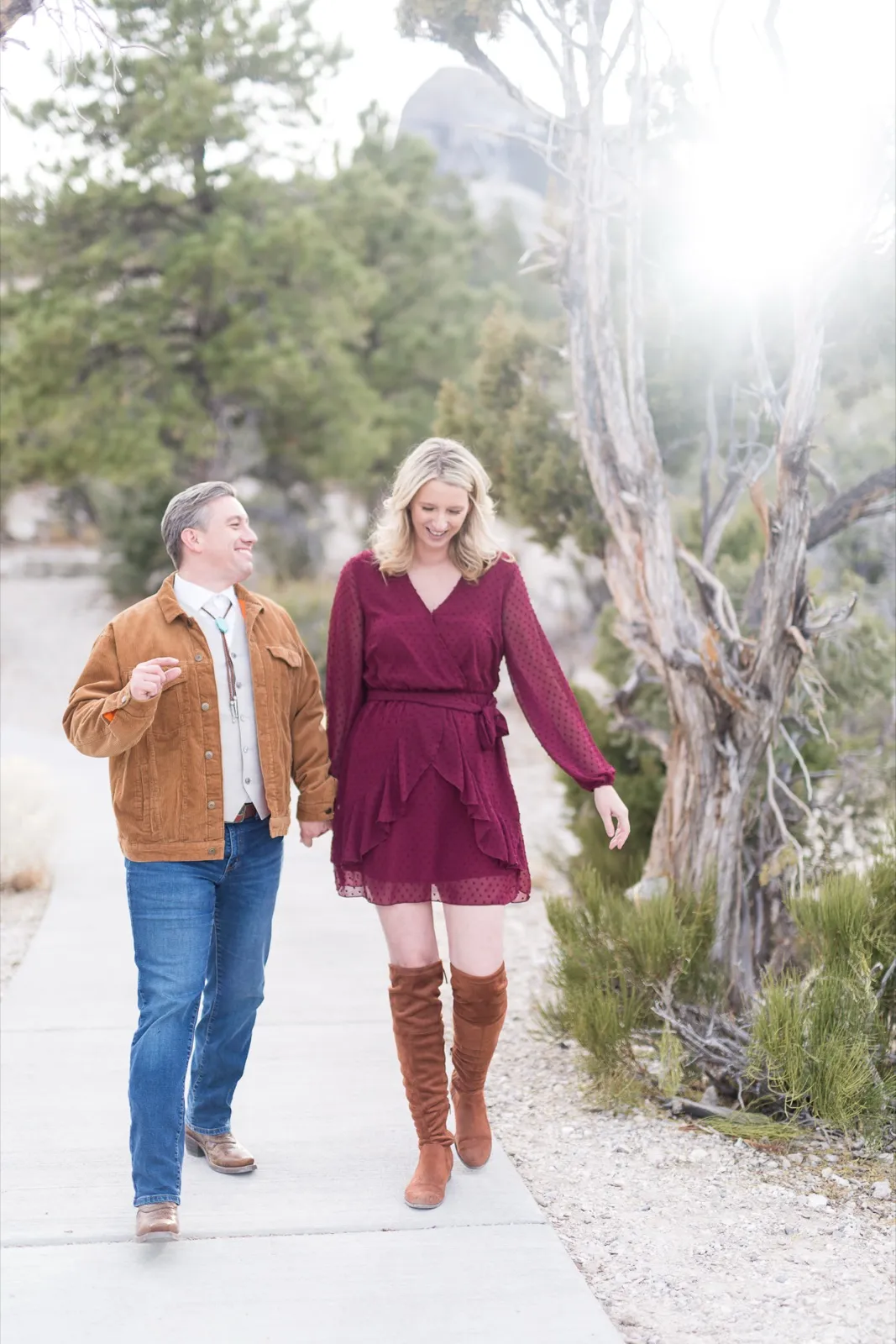
Red Rock and the open desert. The rock changes color as we move around, from deep red to tan and cream to gray, so your colors depend on the exact spot we pick rather than on the canyon as a whole. A tan dress in front of a tan wall blends into the rock behind it, and you lose the shape of the dress. That same tan dress in front of a deep red wall looks beautiful. There’s also very little shade out there, so in summer plan on standing in full sun the whole time. Here’s what a Red Rock Canyon engagement session looks like.
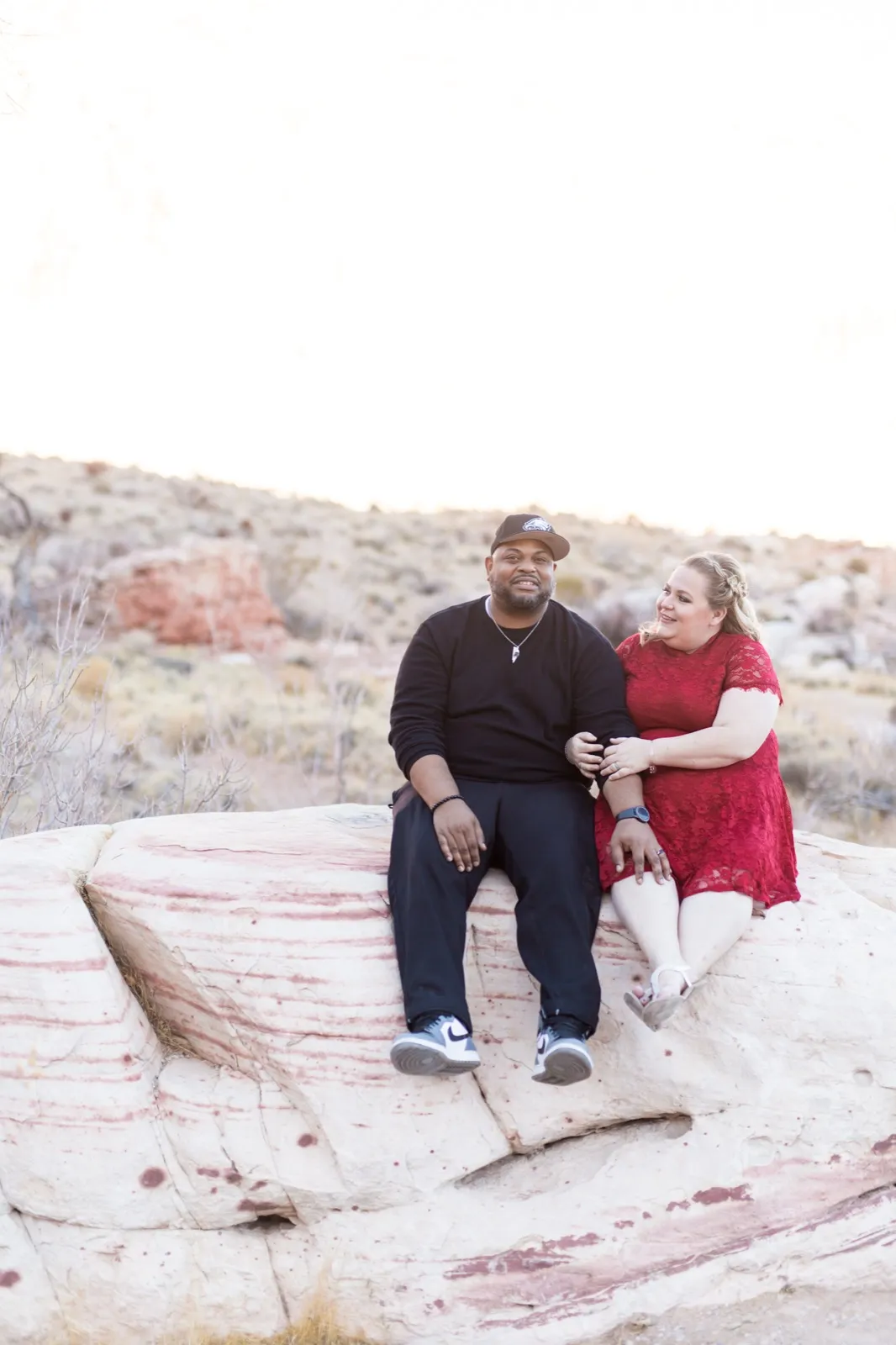
Valley of Fire. Red sandstone dominates here in a way it doesn’t at Red Rock, with far less of the gray and cream rock mixed into the backdrop. This is the one place I’d rule out rust, terracotta, and tan before we even leave, because they blend into the rock almost everywhere we’d shoot.
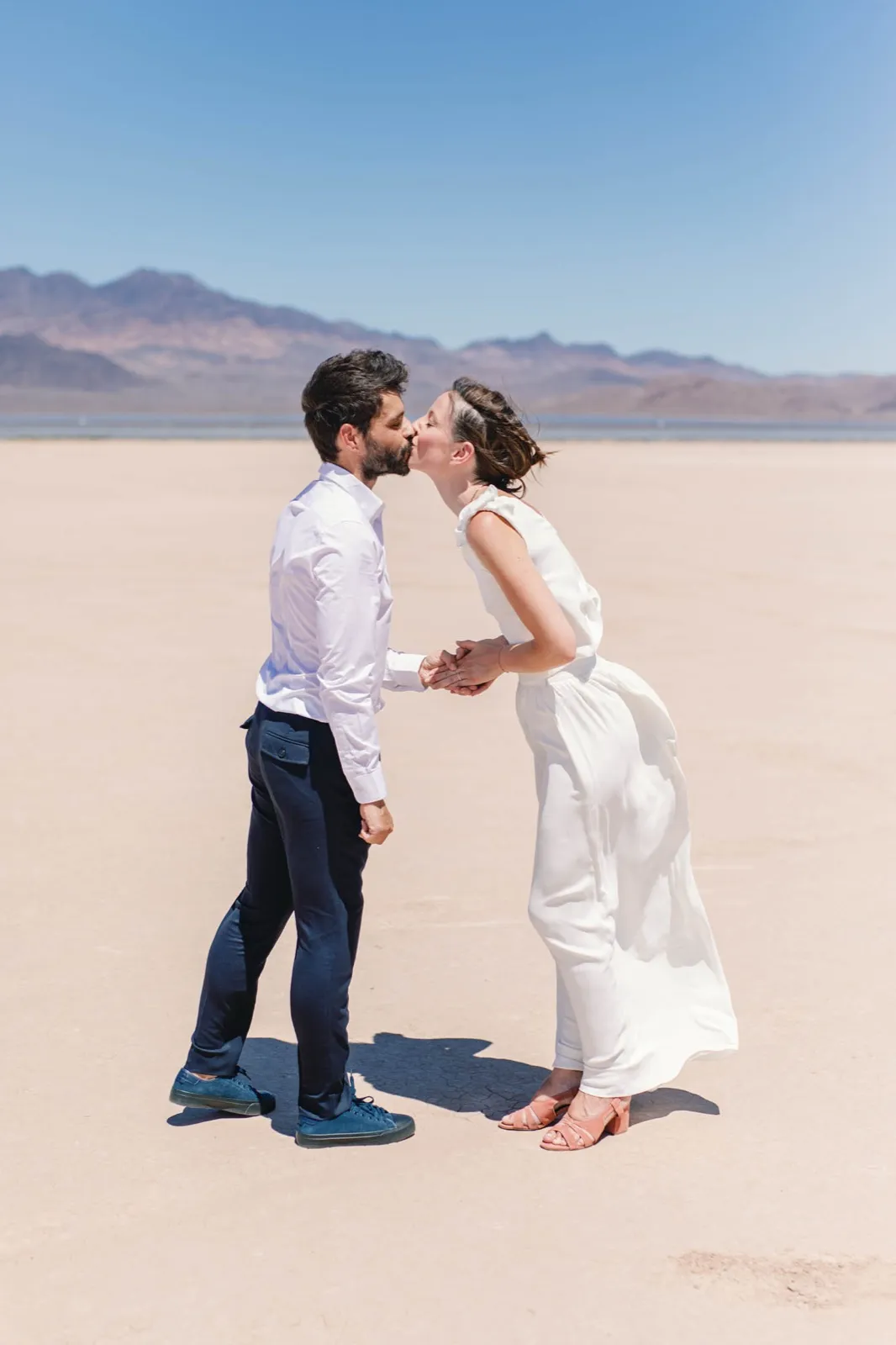
A dry lake bed. A dry lake bed is a flat, empty basin of cracked clay and fine silt, with no plants growing on it. The ground is pale, so wear a color darker than the ground, like navy, deep green, or burgundy. There’s also nothing out there to block the wind, so expect a long hem to pick up dust and lift without warning.
The Strip and the neon at night. The light itself is colored here. The signs throw red, pink, and blue onto skin and fabric. White or very pale clothing picks up the color of whatever sign is closest to you, so wear deeper solid colors like navy, emerald, or burgundy. Bring a layer even in warm months. Two places to look at: engagement photos at the Bellagio fountains and the Neon Museum.
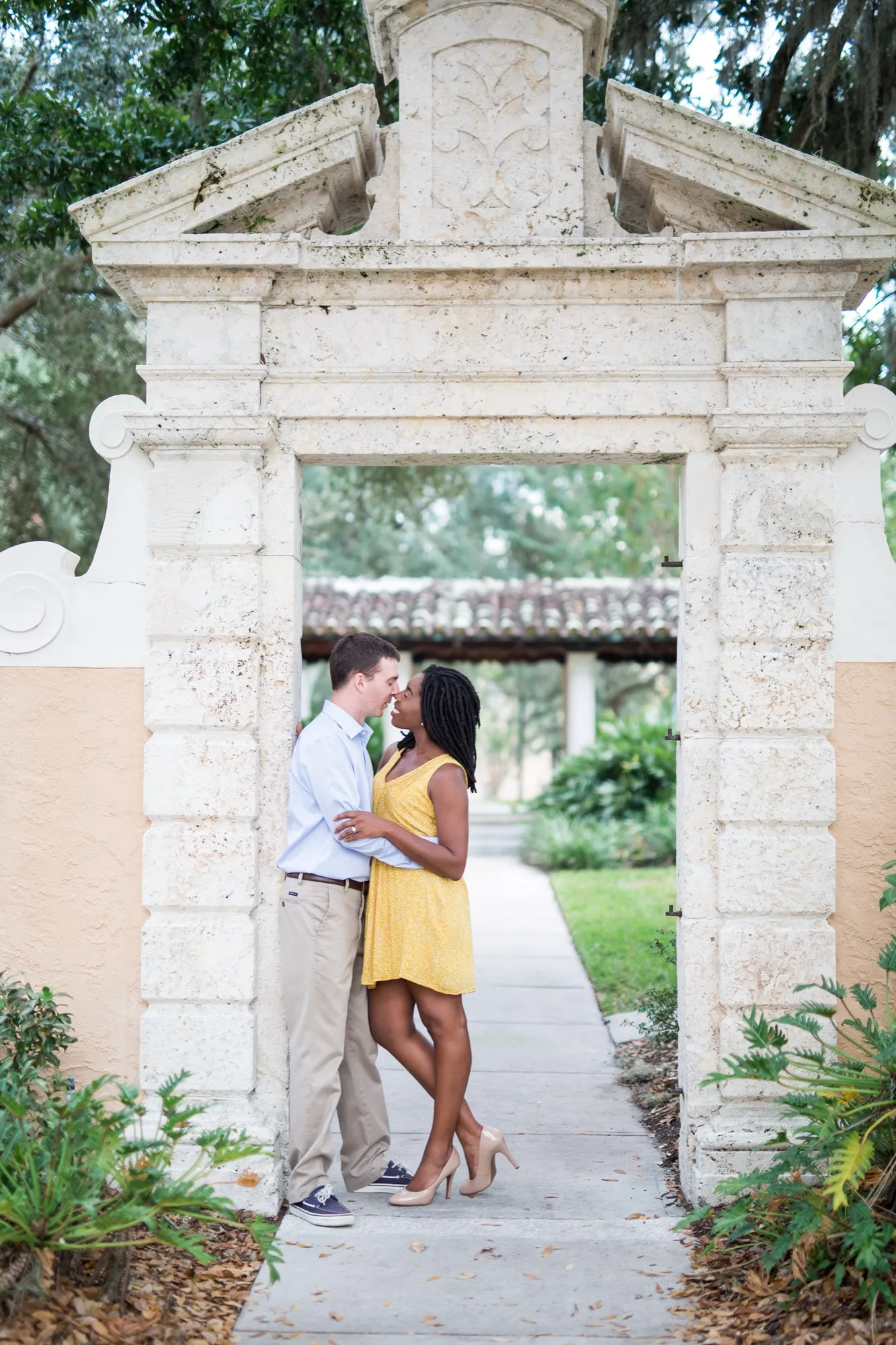
A garden or park in town. Green backgrounds are the easiest ones to dress for. Warm tones, creams, rust, and tan all work in front of trees and grass in a way they don’t out on the sand, so if you love those colors, this is where to wear them. Floyd Lamb Park is the classic version of this, and the Arts District is the same idea with murals behind you instead of trees. If you’re still deciding where to go, I wrote a whole guide to the best engagement photo locations in Las Vegas.
Shoes for both of you
Bring two pairs each: the pair you can walk in and the pair you want in the photos. We move between spots the whole session, so the walking pair stays on your feet and the nice pair rides in the bag until we’re set up somewhere.
The walking pair depends on where we’re going:
- Red Rock and desert trails. Loose sand and pebbles slide around on top of solid stone, so wear hiking boots, trail shoes, or athletic shoes that hold your ankle. Closed shoes and long pants also keep you off the spiky plants, which in my experience grow right up to the edge of most spots worth standing in.
- A dry lake bed. Wear closed shoes you don’t mind dusting off, because the fine silt out there gets on everything.
- The Neon Museum. The museum asks visitors to wear closed toe shoes, since the paths are uneven gravel and the grounds hold broken glass and rusty metal.
- The Strip. The sidewalks are easy to walk on. You’ll walk farther than you expect, though, so wear shoes you could walk a mile in.
Now for the pair you want in the photos. Heels are fine on rock, pavement, and packed dirt. They sink into sand and lake bed silt, which leaves you bracing yourself instead of standing there enjoying your session, so carry them out and put them on once we’re in position. If you want height that works everywhere, a block heel or a wedge stays steady on dirt in a way a stiletto never will. Bare feet photograph beautifully on a lake bed or in sand, and they’re a bad idea at Red Rock, where the ground has sharp gravel and spiky plants in it.
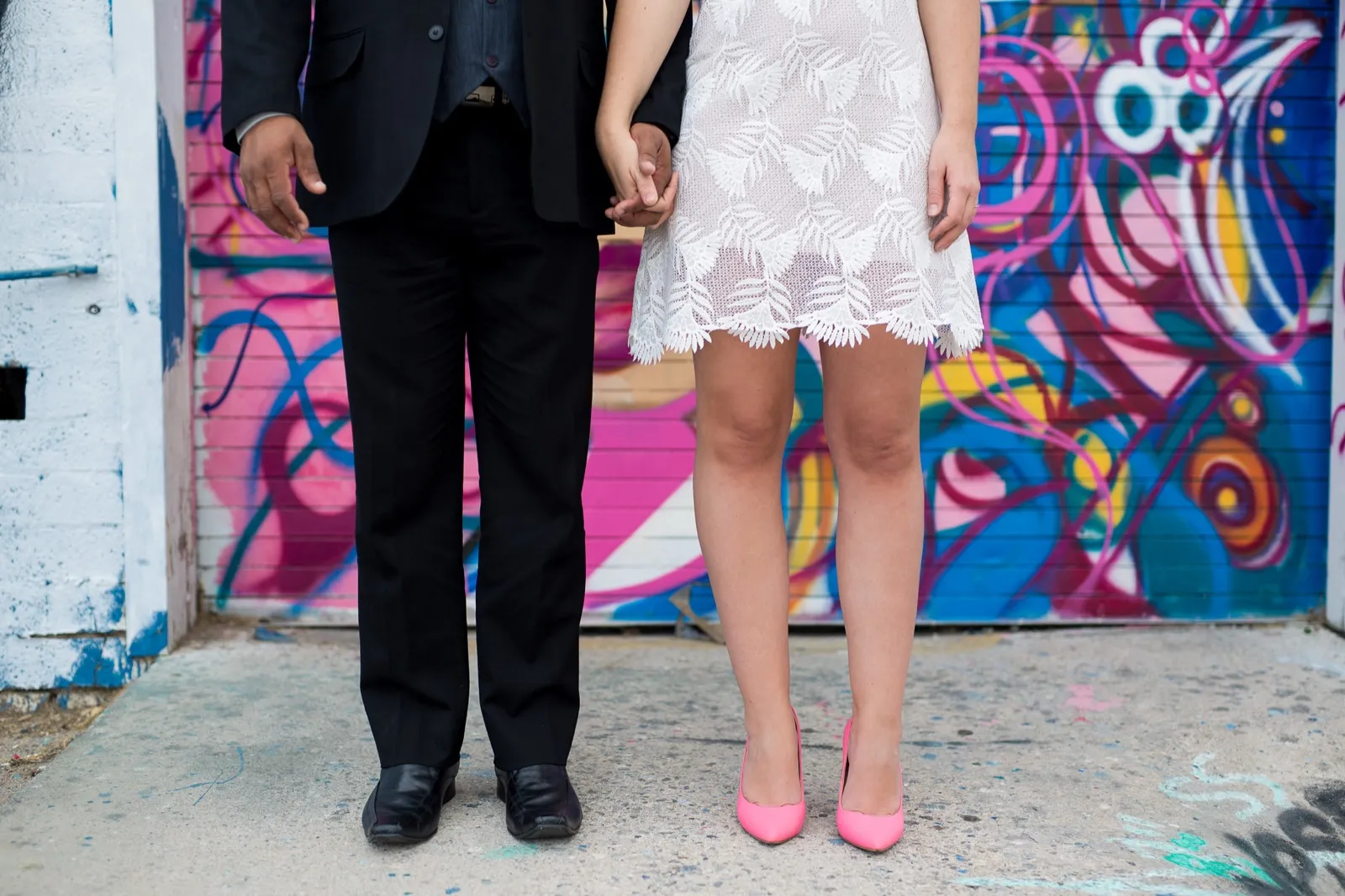
Your partner needs the same two pairs. Clean sneakers look right with jeans or chinos, boots make sense in the desert, and dress shoes belong on pavement.
What not to wear to your engagement session
- Logos, slogans, and big brand names. They pull the eye straight off your faces, and they date the photos to a specific year.
- Brand new shoes. You’ll be walking on uneven ground for an hour and a half, and blisters change how a person stands and smiles. Wear them around the house first.
- Anything you have to hold up, pull down, or adjust. A strapless top that slips or a skirt that rides up means your hands are busy in every single frame. A lot of what I’ll ask you to do involves putting your arms up and hugging.
- Tight repeating patterns. Thin stripes, small checks, and fine houndstooth can look like they are shimmering or vibrating in a photo. Solid colors and larger, softer patterns don’t do that.
- Head to toe black in the daytime desert. Black is great at night, in the neon, and in deep shade. In midday sun against pale ground, black turns into one dark shape in the photo, and the neckline, the folds, and everything else that made you pick that dress stop showing up.
- Anything you don’t feel good in. If you don’t like how you look in it at home, you won’t like how you feel in it in front of a camera, and that shows up in your face.
The small things people forget
Jewelry matters for one reason: I shoot your ring up close, and at that distance the camera sees everything. Clean the ring the night before, tidy your nails, and keep the rest simple, because a stack of bracelets on the hand touching your partner’s face pulls the eye away from both of you. Take the hair tie off your wrist too, since it shows up in every photo where your hands are near your face.
What goes underneath matters more here than it does at home, because our light is bright and direct. Thin light colored fabric goes see through in full sun, so wear something seamless in a color close to your skin under anything pale, and put bike shorts or a slip under anything that moves. If your top is strapless, bring the bra that goes with it.
A hat can be part of the outfit. A straw hat in summer or a felt hat in winter looks like you chose it on purpose, and the brim puts your face in shadow, so plan on taking it off for the close photos. And if your hairstyle falls apart the moment the air moves, pick a different one for a spring session.
Pack a bag to leave in the car with water, sunscreen, a hairbrush, wipes for dusty shoes, and a couple of safety pins. And steam or iron both outfits the night before, because fold lines from a suitcase show up clearly in photos.
Common questions about engagement photo outfits in Las Vegas
Can I wear white for engagement photos?
Yes. White is one of the most common choices I see at engagement sessions, and nobody will think you’re jumping ahead to the wedding, because an engagement dress doesn’t look like a wedding dress. White also photographs well against red rock and against green trees. The two places to be careful are pale sand, where white can blend into the ground, and neon at night, where white picks up the color of whatever sign is closest to you.
How far ahead should we pick our outfits?
About a week out. That gives you time to try both outfits on, walk around the house in the shoes, and wash or steam everything without a rush. It also leaves room to send me photos and swap something if a color is going to fight with the location we picked.
Send me your outfit options
If you’re standing in your closet holding two dresses and you can’t decide which one to bring, email me photos of both. I’m happy to help you choose, and honestly, I love being asked. It’s much easier to sort out at home than in a parking lot at Red Rock.
You can see how sessions run on my engagement session page, and when you’re ready, get in touch and tell me what you two are thinking.