
August 25, 2026
Light and Airy Wedding Photography in Las Vegas
What light and airy wedding photography means, whether the look works at a Las Vegas resort, chapel, or ballroom, and how to tell if it is the style you want.
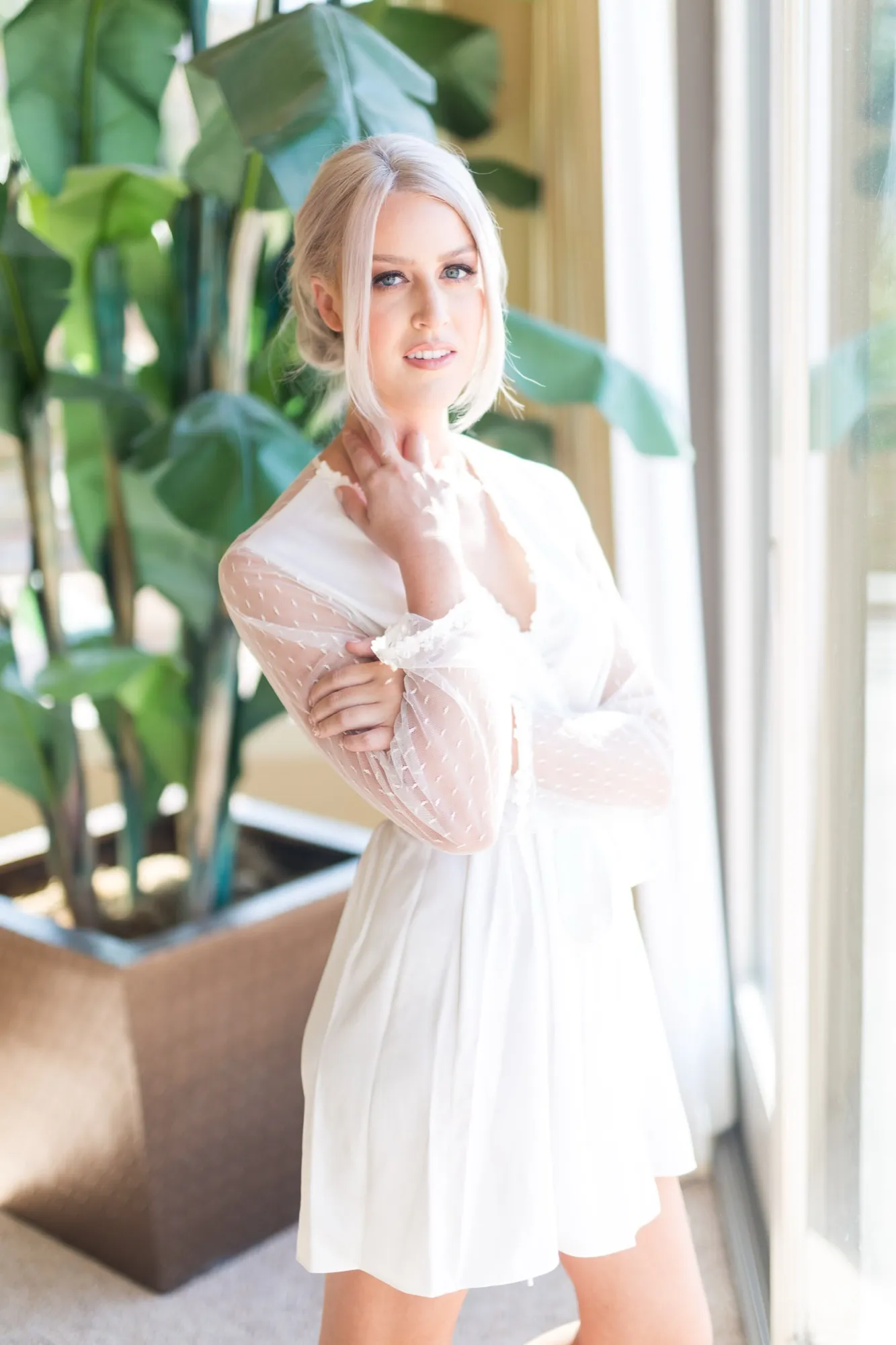
Light and airy wedding photography is a bright, soft style. The whole photo is bright, from the faces to the background, the shadows stay gentle instead of going deep, the colors are pale and a little warm, and the whites in your dress still look white. Photographers get that look by working with natural light and by editing with a light hand, so the finished photo looks close to what your day actually looked like.
I’m McKenzie, the photographer behind McKenzie Stewart Weddings. I’m a Las Vegas native, I’ve been photographing weddings since 2009, and I’ve personally photographed more than 300 of them. Light and airy is how I shoot. If you’ve been saving bright, glowing photos and wondering whether your own will look like that, the answer depends mostly on where your wedding happens and what the light is doing there.
What Light and Airy Wedding Photos Actually Look Like
When you’re scrolling through a photographer’s portfolio, four things tell you that you’re looking at a light and airy gallery.
- The whole photo is bright. Faces, background, and dress all sit on the bright side, and the picture feels open rather than heavy.
- The shadows are soft. Look under a chin, under a hat brim, or under a veil, and you can still see detail in there instead of a solid patch of shadow.
- The colors are pale and slightly warm. Skin looks like skin, greens look calm instead of neon, and a white dress reads as white rather than gray or yellow.
- The brightness is even across the frame. One side of the photo isn’t blazing while the other side disappears.
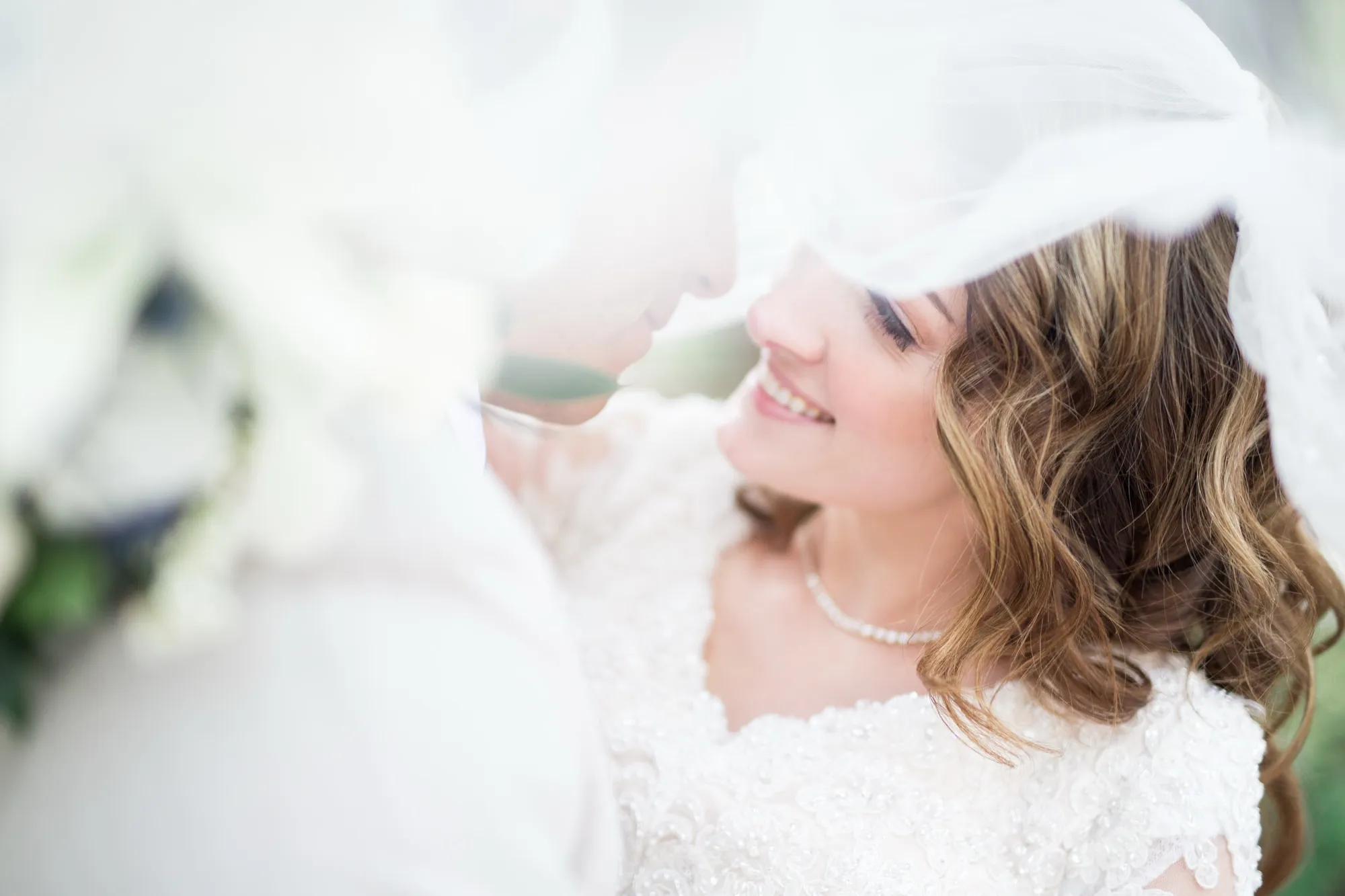
Photographers sometimes call this a high key look, which just means there isn’t much contrast in the photo between the bright parts and the shadows. National wedding coverage lists light and airy among the main wedding photography styles and describes it as photographers using as much natural light as they can.
How Photographers Get the Light and Airy Look
Two things make this look. The first is the light you’re standing in on your wedding day, and the second is how the photos are edited afterward. The light matters more.
This style needs soft light, so a light and airy photographer looks for light that is already soft rather than trying to fix hard light later. That usually means open shade, a big window, or the last hour before the sun goes down. Then they turn you so that the soft light lands on your face. Or they put the sun behind you, so the hard light hits your hair and your face gets lit by softer light bouncing around you. Which way you’re facing decides whether the light falls evenly across your face or leaves half of it in shadow. That’s why your photographer keeps asking you to turn a little.
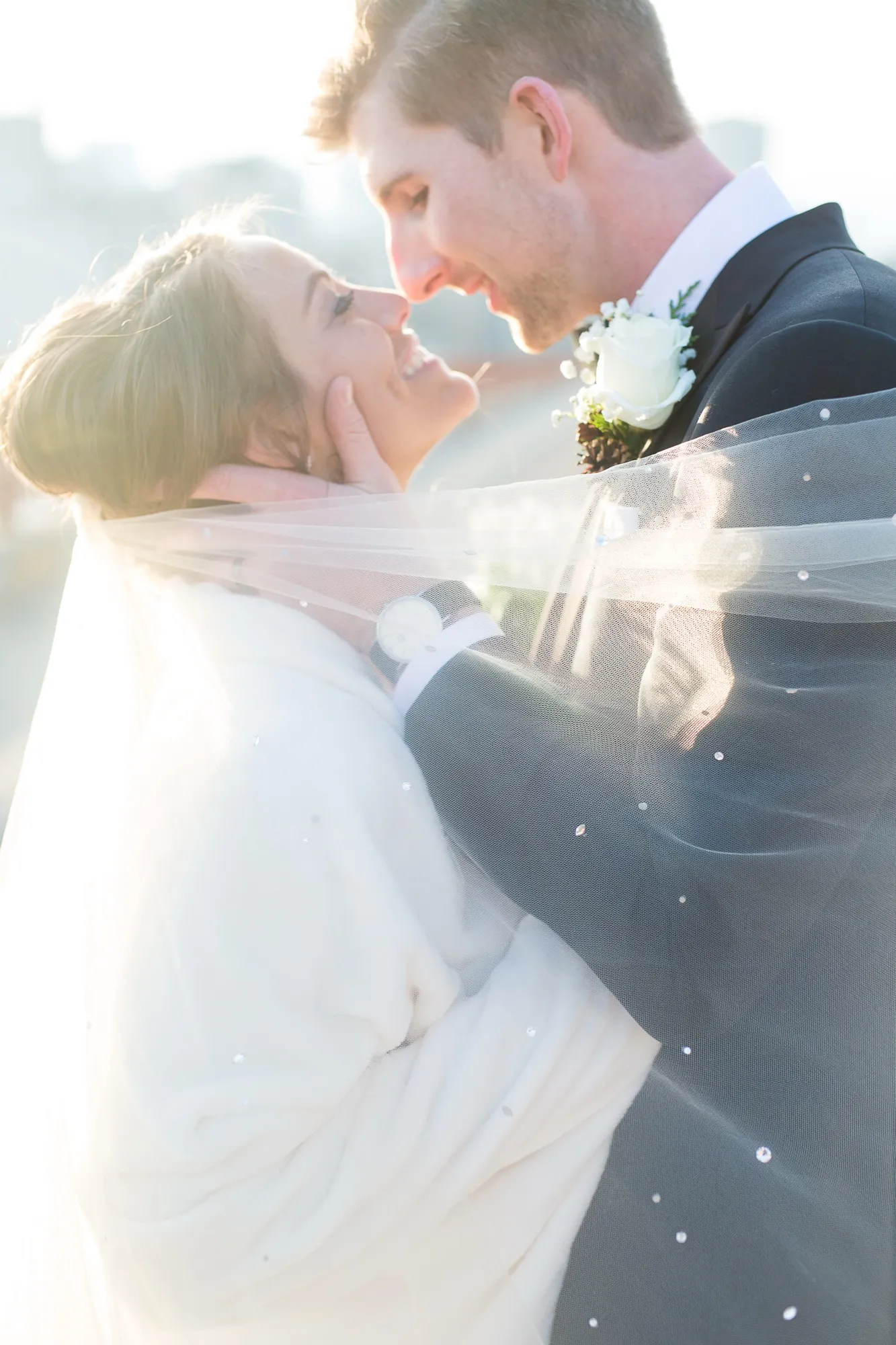
The second part is the editing, and for this style the edits are small. Editing for this style means lifting the shadows a little so you can see into them, keeping the contrast low, and correcting color so skin looks like skin and your dress looks white. My own rule is that the photo before I edit it and the photo after I edit it shouldn’t look very different. I want your photos to look like what your day actually looked like.
How Light and Airy Compares to Other Wedding Photo Styles
Most wedding photographers edit in one of three general directions. Knowing which one you’re looking at makes portfolios much easier to compare, because a lot of galleries start to blur together after a few weeks of scrolling.
| Style | How the photos look | What it does with color | How to tell if it’s you |
|---|---|---|---|
| Light and airy | Bright overall, soft shadows, even brightness across the frame | Pale and slightly warm. Whites stay white and skin stays natural | The wedding photos you’ve saved are mostly bright ones where you can see everyone’s face easily |
| True to color | Brightness and contrast close to what your eye saw on the day | Accurate. Bold decor colors show up bold | You picked your colors carefully and you want them to look exactly right in the photos |
| Deep and richly colored | Deeper shadows and stronger contrast, with bright areas right next to shadowy ones | Rich and deep, and stronger than the colors looked on the day | The photos you’ve saved have deep shadows in them, and that’s what you like about them |
None of these three is better than the other two. The right one is the one that matches how you want to remember your day.
Is Light and Airy the Right Style for Your Wedding?
It probably is if the wedding photos you’ve already saved are mostly the bright ones. You can check that in about ten minutes.
Go back through the wedding photos you’ve saved from other people, and look at what they have in common. If the ones you kept are mostly bright, with faces easy to see and the whole picture looking like a sunny day, then light and airy is the style you like. If the ones you kept have deep shadow on one side and a bright edge on the other, you want a photographer who shoots that way instead. The pattern is usually clearer than you expect.
Then look at where your day actually happens. If most of your wedding is outdoors or in rooms with windows, you can have this look all day. If most of it is in a room with no daylight, ask any photographer you’re considering to show you their indoor reception work, because that’s the part of a gallery that varies the most from one photographer to the next.
There’s one more thing worth checking before you book anyone. Two photographers can both put light and airy on their website and deliver very different levels of brightness, so a highlight grid on Instagram won’t tell you much. Ask to see one full gallery from one wedding, start to finish. That shows you what your whole day would actually look like.
And if what you want is deep shadows, strong contrast, and a heavily styled look, there are photographers in Las Vegas who are excellent at exactly that. It’s a real skill and it isn’t what I do, so book one of them instead.
Does Light and Airy Work at a Resort, a Chapel, or a Ballroom?
Most Las Vegas weddings don’t happen out in the desert. They happen at a resort, in a chapel, in a ballroom, or in a garden or courtyard attached to a hotel. This style works in almost all of those, and the one thing that decides it is how much daylight reaches the spot where you’ll be standing.
Outdoor spaces at a resort are the easiest case of all. A garden, a courtyard, a terrace, or a lawn beside a pool puts open sky above you, and light that arrives from the whole sky is soft light. Most of those spaces are also ringed with pale walls and pale stone, which bounce more light back onto your face. It’s the same effect pale desert ground has, and you get it without leaving your venue. The one thing to watch outdoors is the time of day, because midday sun is hard on this look.
Rooms with real windows are the next easiest, and they work better than most couples expect. A chapel with windows, the suite where you’re getting ready, an atrium, a room with glass along one wall: all of those give you daylight coming in from one side, and that is soft light. If you can stand near a window, you can have this look indoors.
Rooms with no daylight are the honest exception. A ballroom with no windows, or a chapel lit only by fixtures, will not give you the same bright, open feeling as a portrait taken outside at sunset. Your photographer brings light into that room, and the photos will still look good. They’ll just have more contrast and warmer color than your daylight photos, so the two sets won’t match. That’s true of every photographer working in that room, and it’s better to know it now than when you open your gallery.
The same goes for your reception once the sun is down. Reception photos are lit by whatever is in the room plus whatever your photographer brings, so they’ll look like the evening they were taken in rather than like your sunset portraits. If the bright, soft look is what you care about most, the way to get more of it is to put more of your photos in daylight.
What Happens if Your Wedding Is in Harsh Midday Sun
Midday summer sun is the hardest light there is for a bright, soft style. Most advice about this style skips right past that and tells you to shoot at sunset, which is no help at all if your ceremony is at two in the afternoon in July.
When the sun is nearly overhead, the shadows fall straight down. That drops shadow into your eyes, under your nose, and under your chin, and it makes everyone squint. There’s an easy way to tell when you’re in that light: if your shadow is shorter than you are, the sun is high and at its most intense.
The fix is where you stand. Open shade means standing in shade that still has a big piece of open sky above it, like the shadow side of a building, the space under an overhang, or the shade of a tall wall. The light there is soft and even because it reaches you from the whole sky instead of from the sun alone, so nobody is squinting and the shadows on your face stay gentle. The other option is turning you so the sun is behind you. The hard light lands on your hair and shoulders, and your face gets lit by the softer light bouncing off the ground and off everything around you.
That fix depends on your photographer knowing the place. Someone who has shot your venue before already knows where the shade is at four in the afternoon in July and which side of the building to use. I’ve photographed at most of the venues in this valley, and at a lot of them many times over, so I usually already know where the shade will be at yours before I get there. And I shoot all summer, including the weddings some photographers would rather not take in the heat.
Do You Have to Do Photos Before the Ceremony?
No. Whether you see each other before the ceremony is entirely your call, and it does not decide whether you get this look.
What decides it is what time your ceremony starts compared with what time the sun sets, because the hour before sunset is the best light of the day. You just need your portraits as a couple to happen somewhere in that hour. Sunset moves a long way across the year here. At the end of June the sun goes down around 8:00 pm in Las Vegas, and at the end of December it’s down by about 4:30. So an early afternoon ceremony in June leaves you hours of good light afterward, and you can do every single portrait after the ceremony.
The choice only gets real when your ceremony starts close to sunset. Then you have to pick one: see each other before the ceremony and use that hour for portraits, or wait for the aisle and take your portraits in whatever light is left. Plenty of couples choose the aisle and are glad they did. It’s worth deciding on purpose rather than finding out about it on the day.
What Light and Airy Looks Like Out in the Desert
If part of your day happens outside the city, the desert around Las Vegas is unusually good for this style. Las Vegas is one of the sunniest major cities in the country, with sun about 84 percent of the daylight hours in a year. Overcast days are rare here and rain is rarer still, so the soft gray sky that a lot of wedding advice tells you to hope for is not something you can plan a Las Vegas wedding around. Plan on sun instead.
The best light out there is the hour before sunset, the stretch photographers call golden hour, when the sun is low enough to reach you from the side instead of from straight overhead. Pale ground helps too. Where the ground is light colored and dry, like the dry lake beds south of town, it bounces sunlight back up into your face, which fills in the shadows under your chin and your veil. That soft light from below is flattering, and it’s the real advantage of shooting out there instead of on a lawn.
Each spot does something different with the light. At Red Rock the pale sandstone catches the low evening sun and throws warm light back onto you if you’re standing near it. At Valley of Fire the ground is red rather than pale, so it colors the light more than it brightens it. Lake Las Vegas puts water in the frame, and water reflects the sky back at you. Red Rock sits close to two thousand feet above the valley floor, and Mount Charleston sits thousands of feet above it, so the sun comes through stronger at both, and finding shade matters even more up there. I’ve photographed at every one of them, and I’ve lived here almost my whole life, so I know what the light does at each one.
Will Light and Airy Photos Still Look Good in Twenty Years?
Yes, as long as the editing stays close to real life. The photos that end up looking dated are the ones where an effect was added on top of the picture. You’ve seen them: the single red rose in a photo that’s otherwise black and white, the whole frame tipped at an angle, the brown sepia wash over everything. Each of those was popular for a few years and then went out of style, and you can usually tell what decade a photo came from just by looking at it.
I don’t do any of those. What I do is correct the brightness, correct the white balance, and get the color accurate, so your dad’s face is the color your dad’s face actually was. That’s a big part of why I keep the editing light. I want your photos to look as good in twenty years as they do the week you get them.
Questions Couples Ask About Light and Airy Wedding Photos
Is light and airy photography just overexposed photos?
No. Overexposed means the bright parts of the photo have lost their detail completely, so a white dress turns into a blank white shape with no fabric or lace showing, and that detail can’t be brought back afterward. A light and airy photo is bright, and the bright areas and the shadows both keep their detail, because the brightness comes from soft light and low contrast rather than from pushing the whole picture brighter.
Do light and airy wedding photos print well?
They print well, and they won’t look identical to what you see on your phone. A screen makes its own light, while paper can only reflect the light already in your room, so a print holds a much narrower range of brightness than a screen does. Expect a print that looks close to what you saw on the screen but a little less bright, rather than an exact match. Ask for glossy paper if you want the bright areas to keep their detail, because glossy holds more of that range than matte does.
How does a bright style handle deeper skin tones?
You both come out exposed correctly, as long as your photographer sets the exposure for the two of you standing there rather than using the same setting for every couple. The reason the question exists is that for decades, photo labs calibrated color using reference cards that pictured only white models, so a photo of two people with different skin tones often came back with one of them underexposed and the other washed out. I’ve photographed many biracial couples and weddings across a lot of cultures, and I set the exposure for the people actually in front of me.
How far ahead should I plan my wedding day around the light?
Start as soon as you have your date and your venue. Sunset time is what sets your photo schedule, and it moves by about three and a half hours across the year in Las Vegas. Once you know what time the sun sets on your date, put your portraits as a couple in the hour before it and build the rest of the day around that.
Let’s Talk About Your Wedding
If you’re getting married in Las Vegas and you want photos that look bright and soft and like the day you actually had, I would love to hear about it. Email me at mckenzie@msweddingimage.com with your date and your venue, and I’ll tell you what the light does there at that time of year. I really do love talking about this!