
August 31, 2026
First Look at a Las Vegas Wedding: Why I Recommend One
A first look at your Las Vegas wedding means seeing each other before the ceremony. Why I recommend one, how long it takes, and where it lands in your day.
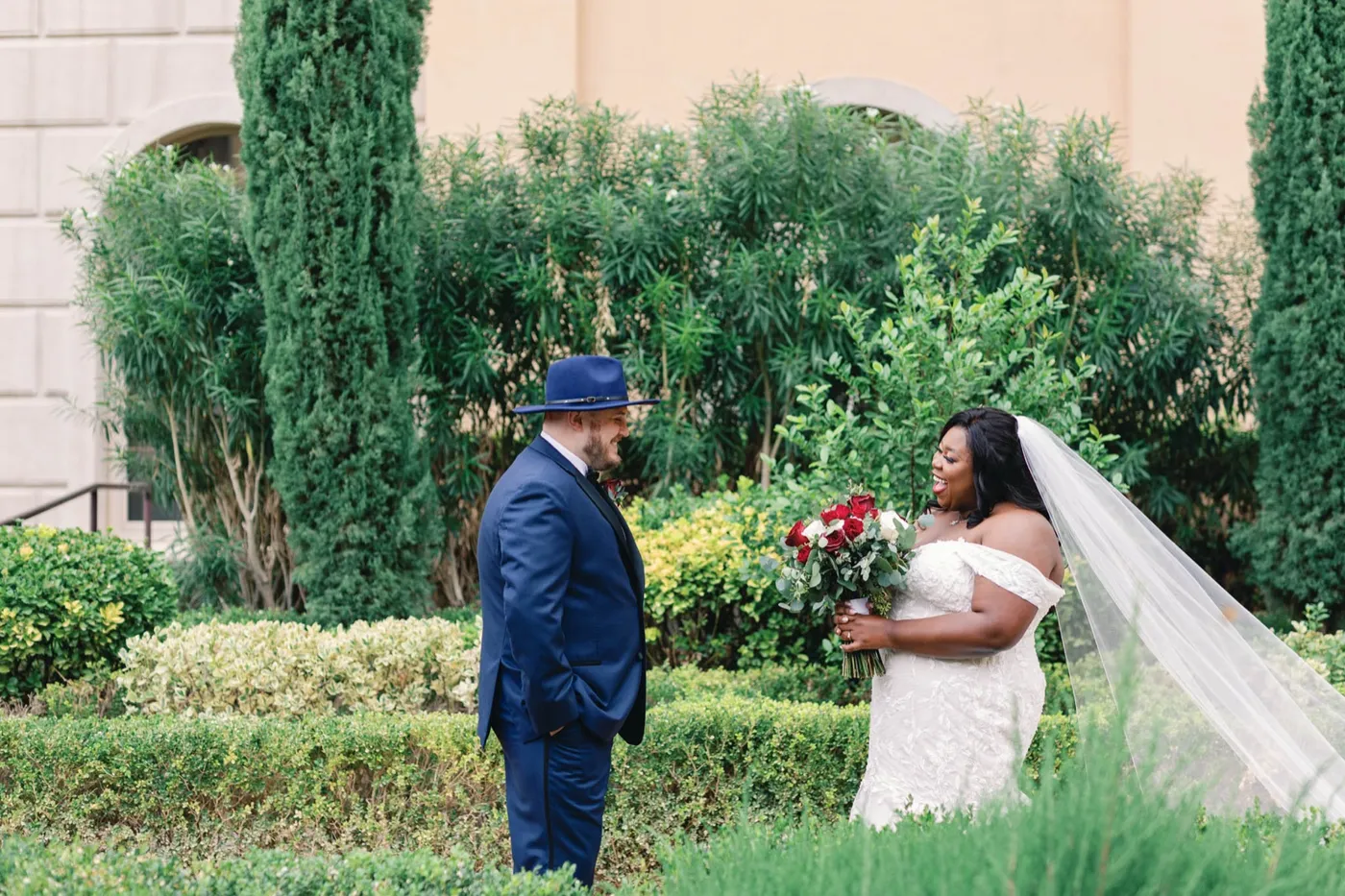
A first look is the moment you and your partner see each other before the ceremony instead of waiting until you walk down the aisle. It usually happens somewhere quiet, with only your photographer nearby. I recommend one to almost every couple I photograph. I’ve been photographing weddings in Las Vegas since 2009, more than 300 of them myself. The reason I recommend a first look comes down to your schedule: it lets you finish most of your photos before the ceremony starts, so the hours after the ceremony belong to you.
You wouldn’t be doing anything unusual by choosing one. Roughly half of couples now see each other before the ceremony, according to survey work from The Knot and Zola.
Will a first look ruin the moment at the aisle?
No. Seeing each other for the first time is a big moment either way, and a first look doesn’t take that away from you. What it changes is how many people are watching when it happens. This is the first question almost every couple asks me, so I want to answer it properly.
If you wait for the aisle, that moment happens in front of every person you know. Your parents are watching your face, and some of your guests are holding up phones. If you do a first look, it’s just the two of you. You can say whatever you want to each other, and I stay far enough back that you can forget I’m there. When I ask my couples this question directly and give them a minute to think about it, most of them tell me they’d rather that first moment be private. That’s my own experience with my own couples, not a survey, but I’ve asked it a lot of times.
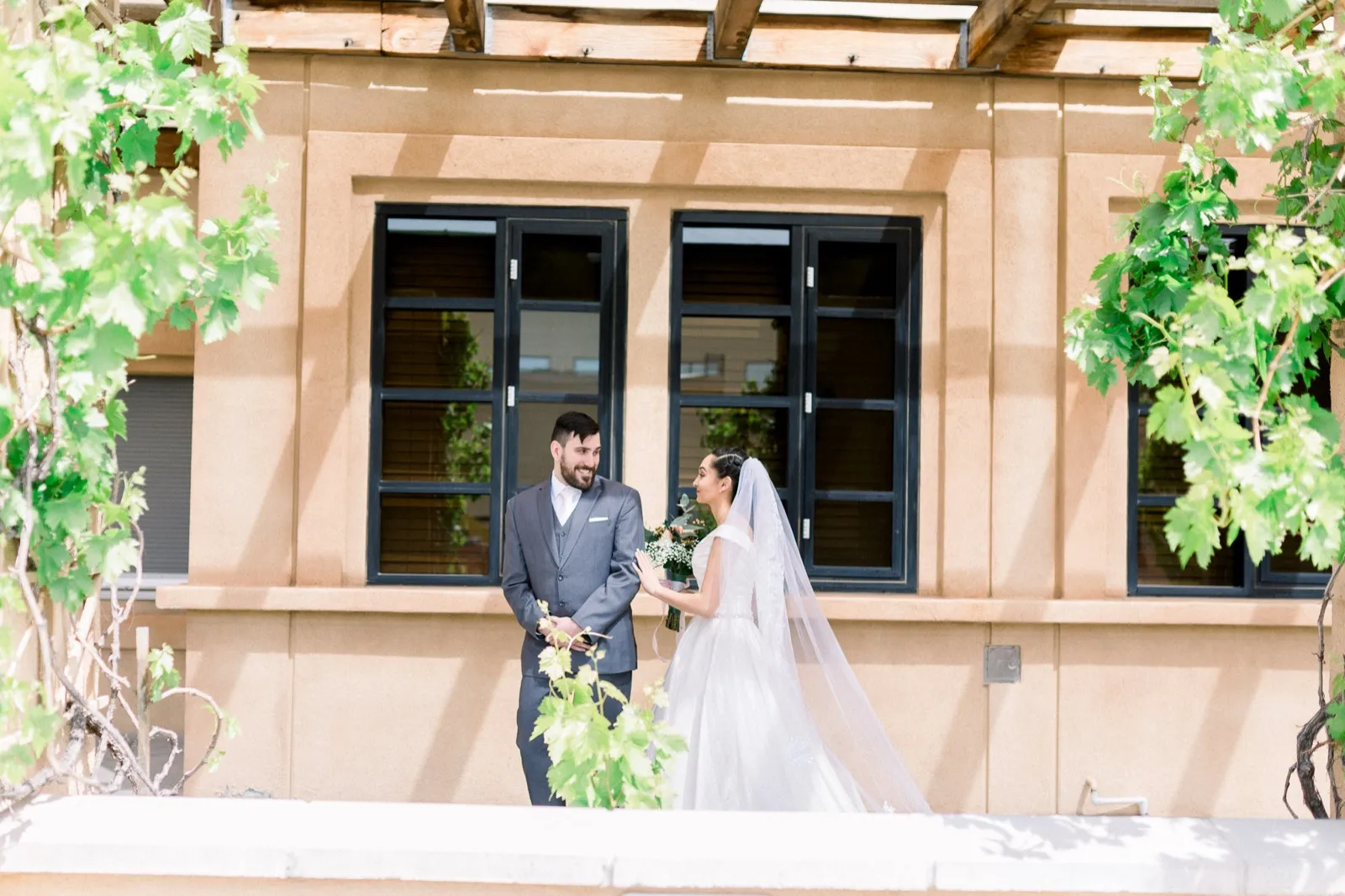
You still get the aisle. Your guests still stand up and turn around, you still walk toward your person, and they still watch you the whole way. What changes is that your first cry already happened earlier in the day. By the time you’re walking, you’re steadier, and you can listen to your own ceremony instead of concentrating on not crying through it.
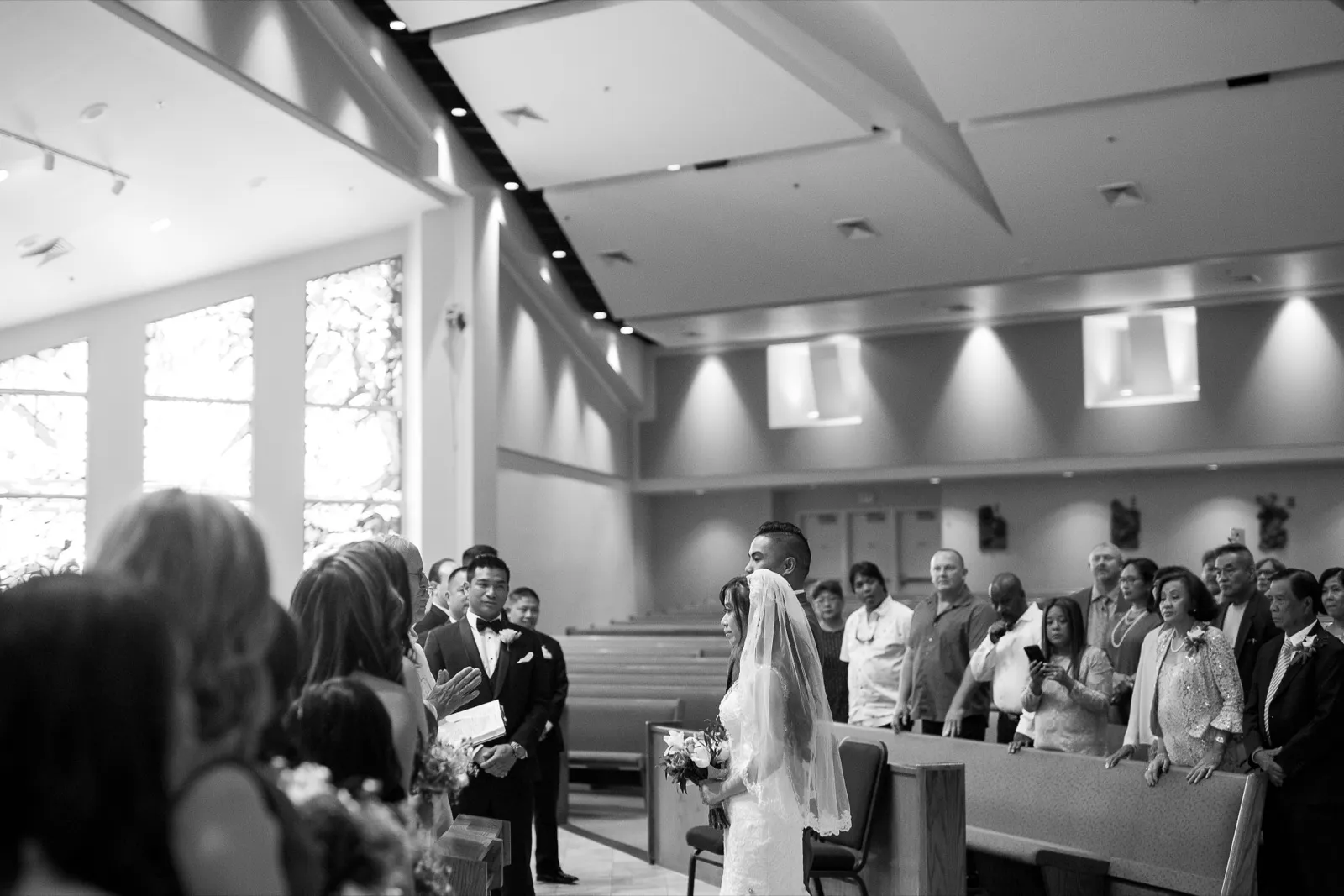
And if you already know you want that moment to happen at the aisle, that’s a good enough reason on its own. I’m not going to talk you out of it.
Where the rule about not seeing each other actually comes from
Most couples I talk to have never looked up where this rule came from, and there’s no reason they would have. The story you hear is that the tradition goes back to arranged marriages, when a wedding was an agreement between two families and nobody wanted the groom to back out once he saw the bride. That version gets repeated all over wedding media. Whether it is really how the custom started is hard to prove, because nobody who prints it ever attaches a time or a place to it. It’s also not a very romantic story.
What is documented is the veil itself, and the veil has carried several different meanings. In ancient Rome it was a good luck charm for a lasting marriage. In the Christian marriage rite, a cloth was held over both people during the blessing. In Jewish weddings the groom is brought to the bride before the ceremony and lowers the veil over her face himself. People still do that today, and it is a wedding tradition where the couple sees each other on purpose beforehand.
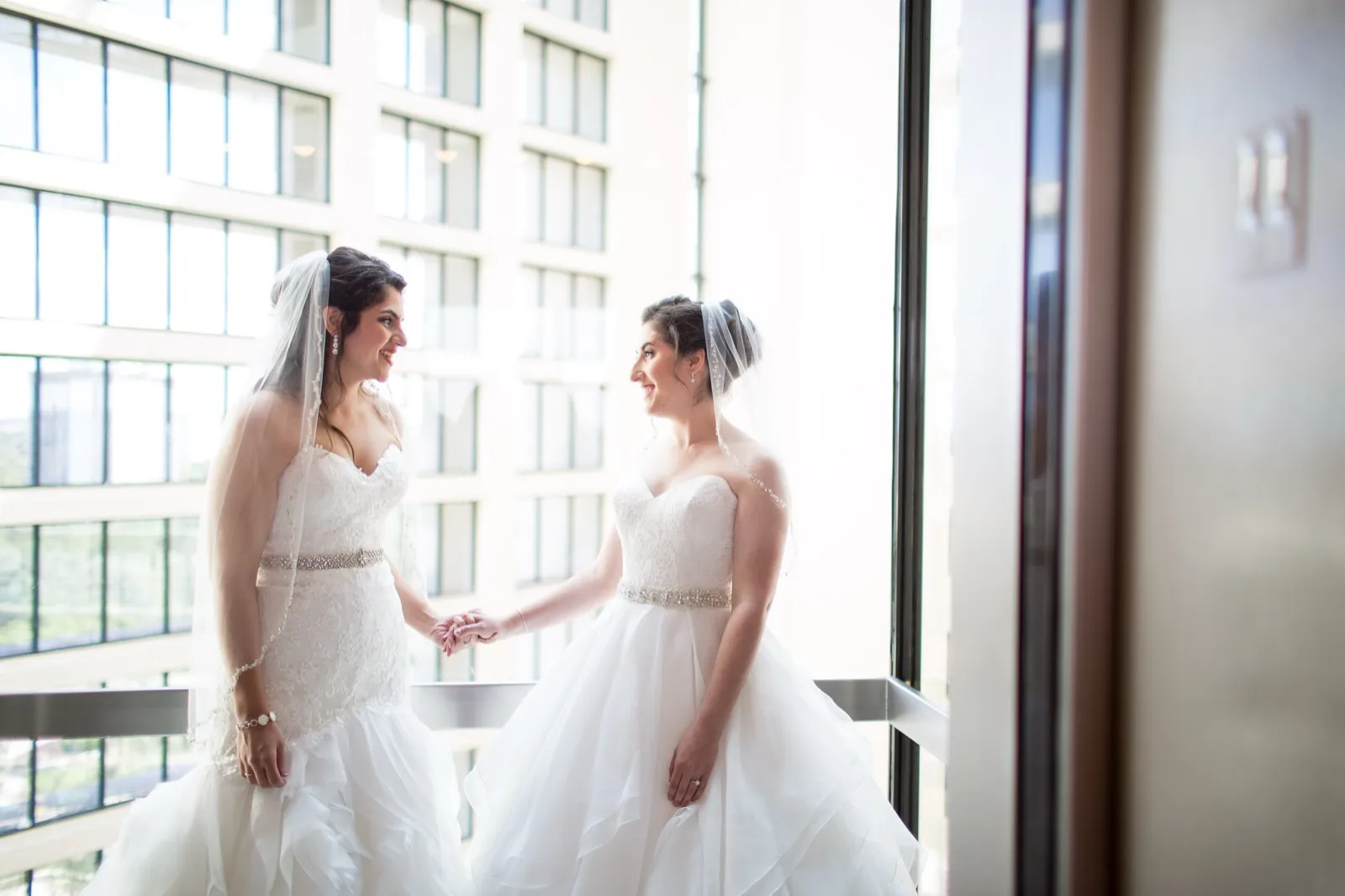
None of that tells you what to do. It only settles one thing. If you were saving the aisle reveal because you felt like you owed the tradition something, you don’t owe it anything, and you can decide this on what you want your day to feel like.
Will you actually get to spend your wedding day together?
Not much of it, if you wait for the aisle. Without a first look, you’re apart from the moment you start getting ready until you’re standing at the front of your own ceremony, and that stretch covers most of the daylight hours of your wedding. You’re in one room with your people, your partner is somewhere else with theirs, and somebody has been assigned to keep the two of you from running into each other in a hallway. I spend more of that morning with you than your partner does. Most couples don’t notice that until the wedding is already over, so I bring it up early.
I got married in Las Vegas on January 2, 2010. We liked the date because written out as numbers, 01022010, it reads the same forward and backward. We decided to see each other before we got ready, and we spent the whole day together. I loved it. I was a nervous bride with a lot to handle, and having my husband Ben around during the stressful parts helped more than anything else did. I also never had to spend my morning managing where he was so he wouldn’t see me.
Seeing him early didn’t cancel getting ready with my girls. I still had that time, and I still got ready separately from him for part of the morning. It only meant that the rest of our day had him in it too.
What the photo list does to your day after the ceremony
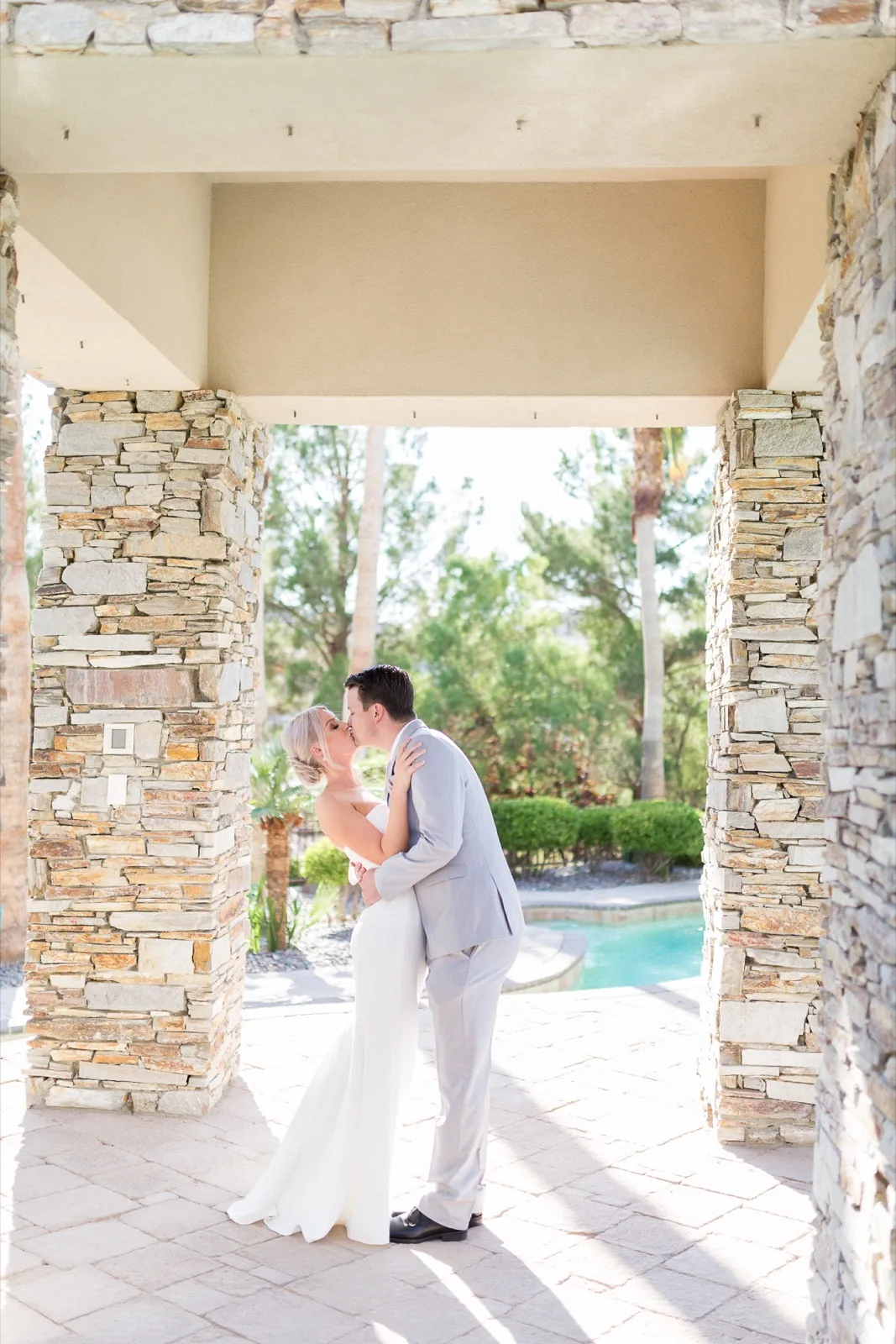
When you skip the first look, every photo with more than one person in it moves to after the ceremony. Family formals go first, then your wedding party, and the two of you come last. All of it happens while your guests are at cocktail hour.
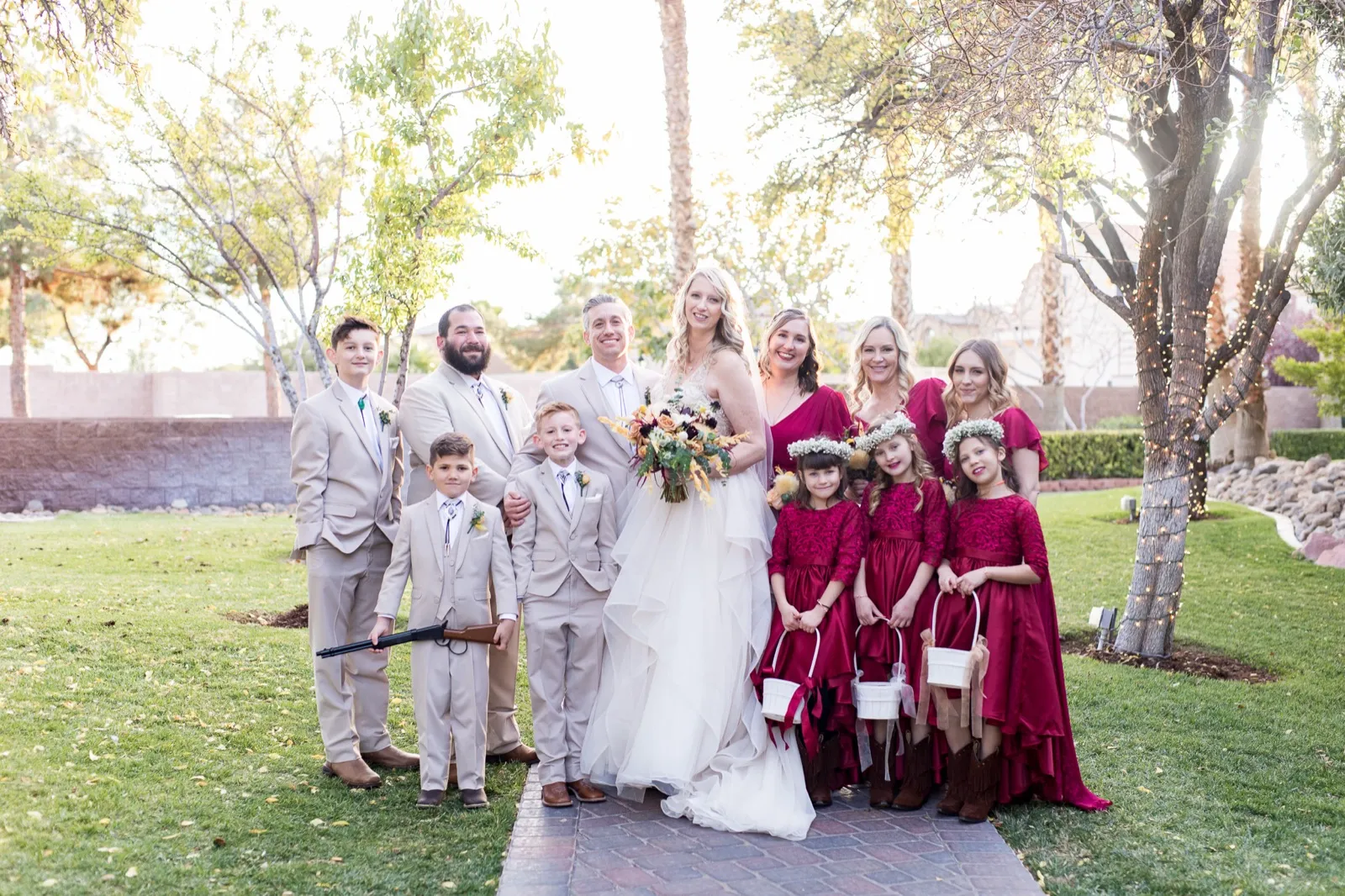
In my experience, by the time it is just you and your partner, there are often only 5 to 10 minutes left. Plenty of times the time is already up, and I’m getting whatever I can before the coordinator needs everyone inside. Rushed photos at the end of a long list are one of the most common reasons couples end up unhappy with their wedding photos. Nobody did anything wrong. The photos of the two of you just got whatever time was left over.
An hour of daylight sounds like more than it is. Say your ceremony ends with a full hour of light still left. That hour has to cover family photos, wedding party photos, and the two of you, and people wander off between groups.
Light is the other problem, and Las Vegas gives you less of it after sunset than most couples expect. Once the sun goes down here you have 25 to 30 minutes before it is too dark to photograph outside without adding light, and that holds all year. So if your ceremony starts anywhere near sunset, the light you were saving your portraits for is gone by the time the family photos are finished. Look up what time the sun sets on your date, and plan the rest of the day backward from there.
A Las Vegas wedding day with a first look, next to one without
This table puts the two versions of the day side by side. The blocks come from sample timelines published by The Knot for a 4 p.m. ceremony and Zola for a 4:30 to 5 p.m. one. Your venue and your ceremony time will move all of these clock times around, so the length of each block is the part worth paying attention to.
| Part of the day | Without a first look | With a first look |
|---|---|---|
| Hair and makeup | Starts around 8:30 a.m., about 4 hours | Starts around 8:30 a.m., about 4 hours |
| Photos begin | Around noon, details and getting ready | Around noon, details and getting ready |
| Early afternoon | Wedding party and family photos shot separately, about 75 minutes, and no photos of the two of you are possible yet | First look and your portraits, about 30 minutes, then wedding party and family photos together, about an hour |
| Last half hour before the ceremony | Touch ups, then you are kept apart while guests arrive | Touch ups, then a break before you walk |
| Ceremony | About 30 minutes | About 30 minutes |
| Right after the ceremony | Couple, wedding party, and family portraits, 60 minutes or more | A short session of just the two of you, then about 30 minutes of family photos |
| Cocktail hour | You spend all of it working through the photo list | You join your guests for roughly the second half of it |
| Your own portraits | After the ceremony only, in whatever light is left | Mostly before the ceremony, with an optional 20 minutes near sunset |
| Reception | Doors open 15 to 20 minutes later than planned, because that photo block lands after the ceremony instead of before it | Doors open on time |
How long does a first look take, and where do you do it?
The first look itself is short. It can run a few minutes or half an hour, depending on whether you’re also exchanging gifts or reading private vows. The block I actually reserve is bigger than that, usually 30 to 60 minutes, because your portraits happen right after the first look, while you’re both still emotional from it and the light is good.
The real cost of a first look is in your morning. In the timelines photographers work from, the morning often starts at the same time either way, because the first look fills an early afternoon block that would otherwise be empty. Real mornings don’t always work out that way. If your hair and makeup schedule already runs right up to the ceremony, a first look means everybody in that chair starts earlier, sometimes by a couple of hours, and beauty teams charge for an earlier call time. The dollar amount depends entirely on your team, so ask them for it. The part you can plan for right now is the timing. To do a first look at two in the afternoon, you have to be completely ready at two, not almost ready.
A good first look spot needs three things. Your guests cannot see it, the light is soft rather than direct, and you can reach it without walking through a hotel lobby or across a casino floor on the way. That last one matters more in Las Vegas than anywhere else I’ve photographed. At a lot of resort properties, the shortest route from your suite to a good photo spot runs straight through public space, past strangers with phones. I grew up here and I know most of the venues in the valley, so I usually have your spot picked before I arrive.
What that spot turns out to be depends on the kind of venue you booked:
- Resort and hotel properties. A pool deck before guests are out on it, a courtyard off a service hallway, or the shaded side of the building. The goal is a route that keeps you out of public areas.
- Garden and country club venues. A covered patio, a stand of trees, or the far end of the lawn before chairs and guests fill it in.
- Banquet halls and event spaces around the valley. A room with big windows and the overhead lights switched off. This is also the answer when the weather is bad.
- Anywhere with a desert or mountain view. Open ground away from the parking lot, early or late in the day, when the light comes in sideways instead of straight down.
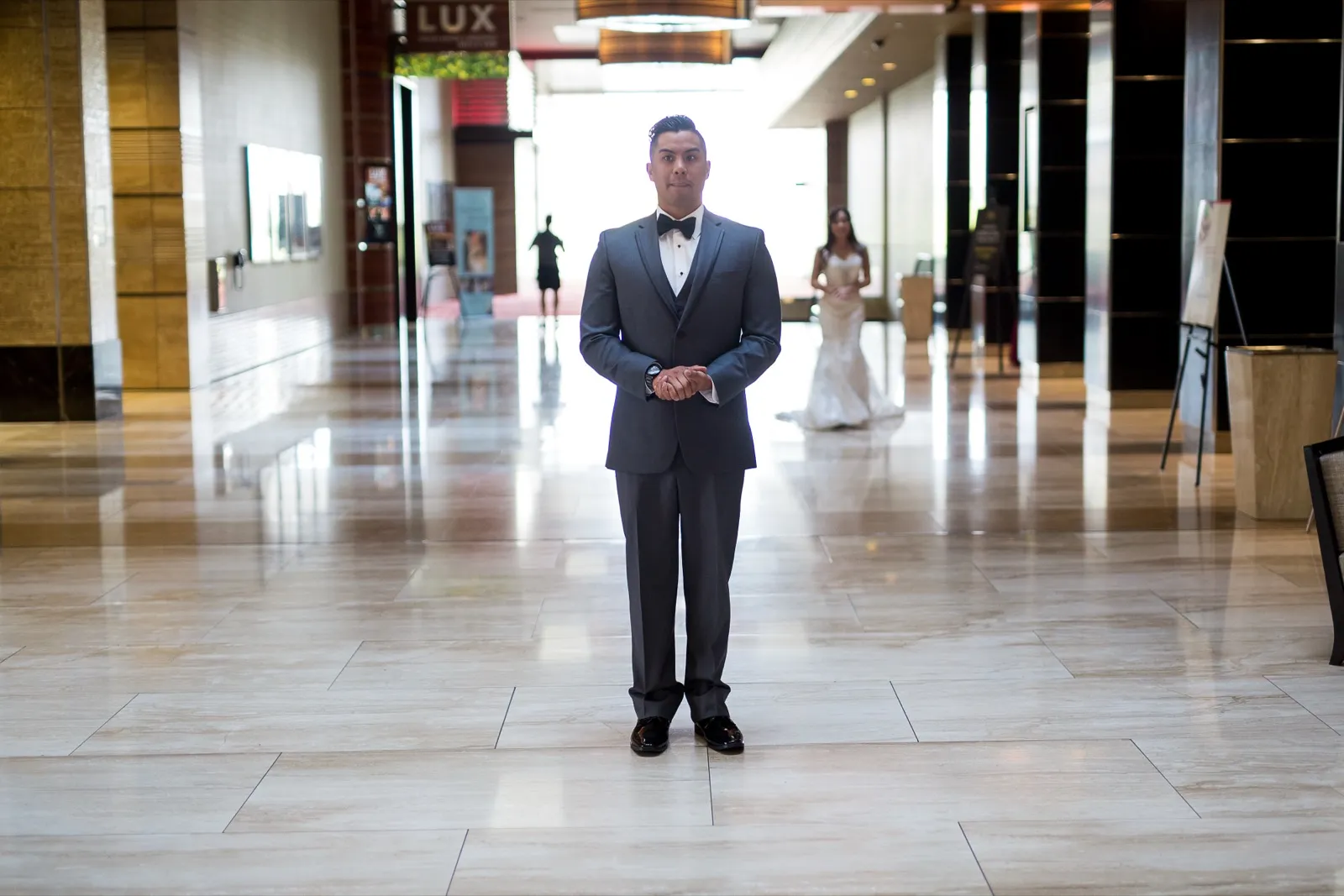
In summer, the answer is almost always shade or indoors. The average high in Las Vegas is 99.4 degrees in June and 104.5 degrees in July, according to NOAA, so an afternoon first look in those months means standing outside in that heat. I have more on how to time a summer wedding here. If you’re getting married in a chapel with a 20 or 30 minute time slot, that slot doesn’t have room for the block I’m describing here, and my elopements page is the better place to start.
Do you still get photos of just the two of you after the ceremony?
Yes, and they are often the best photos of the whole day. Once you’re married and the only thing left is a short family list, there is nothing left on your list. That’s when I like to pull you away from everyone who wants to talk to you, give you a few minutes alone, and photograph the two of you in that blissful state right after your ceremony. You don’t get that feeling when you’re working through a long list of photos with a coordinator watching the clock.
You don’t need much time for it either. About 20 minutes near sunset is plenty when most of your portraits are already done. By then those photos are extra, and nothing on your schedule depends on them.
Cocktail hour, saying hello to everyone, and eating your own dinner
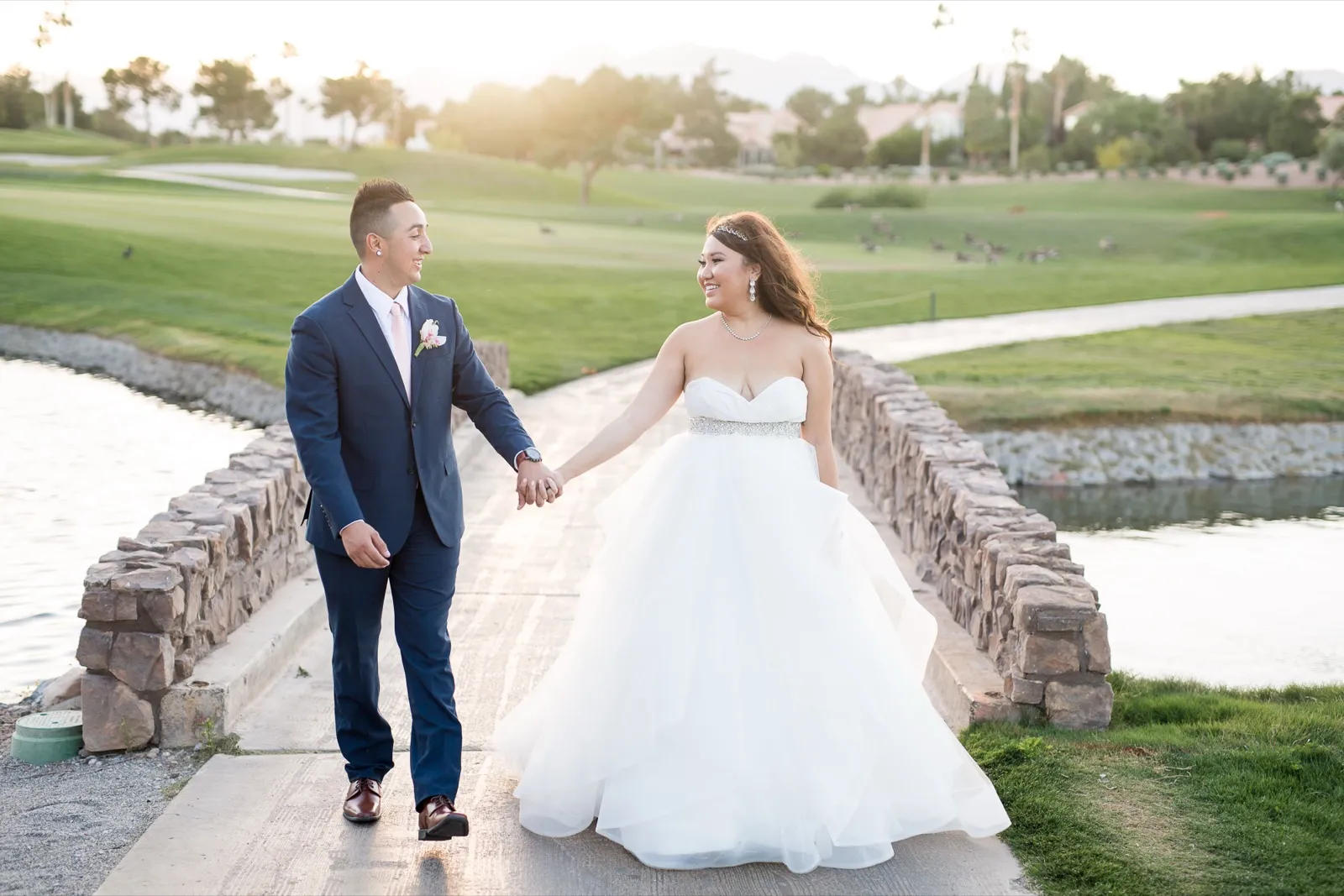
Cocktail hour is usually one hour, and if your photos are not finished, that hour is your photo session. Couples who skip the first look often stretch it to 75 or 90 minutes for exactly that reason. Either way, you’re working through the stretch of the night when all of your guests are together and free to talk to you.
That hour is also the easiest chance you get to talk to them. Everyone at your wedding feels like the most important person there, and in a way they are. You have a different relationship with every one of them, and they all came for you. They all want a minute with you. If they don’t get that minute at cocktail hour, they’ll come find you during dinner, which is how couples end up not eating at their own wedding.
What I like best is when you get about half of cocktail hour and I use the other half for a few photos. You spend your half saying your hellos and sitting down with your partner. If you can get your hellos done before the reception starts, you get to eat in peace.
The different kinds of first looks
There is more than one way to do this, so pick the version that fits you:
- The classic first look. Your partner stands with their back turned, you walk up, they turn around, and you get a few minutes alone before anything else happens.
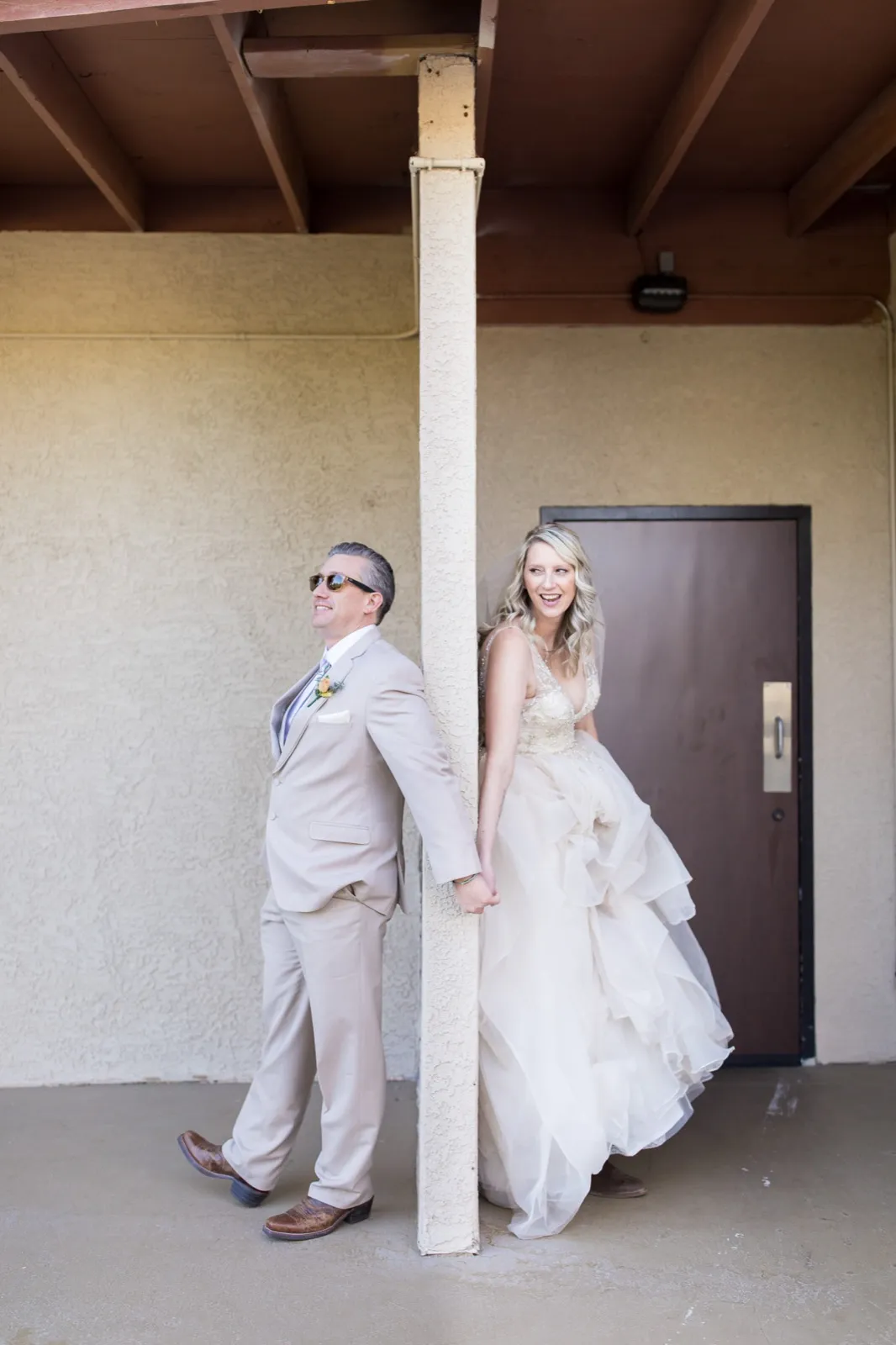
- A first touch. You stand on opposite sides of a doorway or a corner, hold hands, and talk without seeing each other. This is for couples who want the private moment and still want the full reveal at the aisle.
- Private vows. Some couples read their real vows to each other during the first look, because they don’t want their families watching that part. Some are fine with me photographing it, some want me far enough away that I can’t hear but can still take pictures, and some want me gone. Any of those works for me.
- A first look with someone else. A parent, your kids, your grandmother, your wedding party. Zola found that 41 percent of couples are adding a second first look with other people they love.
It is still your decision
I’m not trying to talk anyone out of walking down the aisle to a partner who hasn’t seen them yet. Plenty of my couples choose that, and it’s a good choice. If the aisle reveal is the picture you’ve had in your head since you were a kid, that’s reason enough on its own. The case for waiting gets its own article.
Most couples think of a first look as one more thing to squeeze into an already full morning. In practice it works the other way around. It takes things off your day. Your wedding party photos and the photos of the two of you move ahead of the ceremony. Family photos either move up with them or drop to about half an hour after. The long list you were dreading is mostly done before you ever walk down the aisle.
You get to breathe a little easier. That’s the whole reason I recommend it.
If you’re planning a wedding here and you want to talk through where a first look would land in your day, email me at mckenzie@msweddingimage.com or reach out through my contact page. Tell me your venue and your ceremony time and I’ll tell you honestly what I would do with your morning.